
Is Moissanite a Lab-Grown Diamond?


Moissanite isn’t a lab-grown diamond, it’s a completely different gemstone with its own chemical structure, optical properties, and origin. It’s lab-created, yes, but it’s not a diamond. And that distinction matters, especially if you’re shopping for an engagement ring that lasts.
Let’s break down the key differences:
-
Moissanite is silicon carbide, not carbon (the core element in real diamonds).
-
It sparkles differently, with more rainbow “fire,” which some people love and others find too flashy.
-
It’s less expensive, often 70–90% cheaper than a lab-grown diamond of similar size.
-
It’s nearly as hard as diamond, but not as durable long-term.
-
It has no resale value, unlike lab-grown diamonds, which are gaining traction in the secondhand market.
At Mikado Diamonds, we help you cut through the confusion with honest advice, custom ring options, and lab-grown diamonds that offer real beauty and long-term value, without the markup or pressure.
Still weighing your options? Keep reading to find out whether moissanite or lab-grown diamonds are truly worth it for you.
Moissanite vs Lab-Grown Diamond: What’s the Real Difference?
When you’re ring shopping, it’s easy to get caught between terms like “lab-created,” “synthetic,” and “simulant.” And nowhere is that confusion more common than with moissanite. It sparkles. It’s man-made. It’s affordable.
But let’s set the record straight.
First Things First: Is Moissanite a Lab-Grown Diamond?

No, moissanite is not a lab-grown diamond.
It’s not a kind of diamond. It’s not a version of a diamond. And it doesn’t become a diamond just because it’s grown in a lab.
Here’s the deal.
Moissanite is made from silicon carbide. Lab-grown diamonds are made from pure carbon, just like natural diamonds formed deep in the Earth. They’re both lab-created, yes, but that’s where the similarities end.
The confusion exists because of how both stones are marketed. Some retailers call moissanite a “diamond alternative” or even worse, a “synthetic diamond.”
That language is misleading at best. Just because something sparkles and comes from a lab doesn’t make it a diamond.
“Just because it’s sparkly and lab-made doesn’t make it a diamond.”
The truth matters here, especially if you’re shopping for a forever ring. Because if you’re expecting one thing and get another, the difference won’t just show up under a microscope.
It’ll show up in how the ring is perceived, valued, and cherished.
Science Class (But Make It Sparkly): The Mineral Differences

Let’s get a little geeky for a second, because what your ring is made of changes everything about how it looks, lasts, and holds value.
-
Moissanite is a mineral made from silicon carbide (SiC).
-
Lab-grown diamonds are crystallized carbon, identical in every way to mined diamonds.
That one difference? It’s why they look, feel, and behave so differently in the real world.
Moissanite has a higher refractive index (2.65–2.69 vs 2.42 for diamond), which means it bends light more intensely. This creates that signature rainbow “disco-ball” sparkle.
While some people love the extra flash, others find it too intense, especially in sunlight or under LED lighting.
It also has a higher dispersion rate (0.104 vs 0.044 for diamonds), which is the scientific reason why moissanite often appears “too brilliant” or “too colorful.”
That may seem like a plus, but in comparison to a diamond’s crisp white sparkle, it can feel exaggerated.
Helpful Resource -> Morganite vs Moissanite: Which Stone Is Right for You?
Price Check: Why Moissanite Costs Less
Let’s talk numbers, because for most shoppers, budget matters.
Here’s a quick comparison:
-
1-carat moissanite: ~$500–$900
-
1-carat lab-grown diamond: ~$1,800–$4,000
-
1-carat natural diamond: ~$4,500–$8,000+
That’s a big range, and it’s why moissanite often tempts budget-conscious buyers. But what’s behind the difference?
Moissanite is easier and cheaper to produce. The raw materials (silicon and carbon) are abundant, and the production process is faster and less energy-intensive than growing diamonds.
On top of that, demand isn’t as high, which helps keep prices lower.
Lab-grown diamonds, on the other hand, are real diamonds, created using high-pressure high-temperature (HPHT) or chemical vapor deposition (CVD) technology, processes that replicate Earth’s conditions and take longer to execute.
As carat size increases, the price gap widens even more. A 2-carat moissanite may cost around $1,200, while a 2-carat lab-grown diamond can run $5,000 or more.
So, is it worth paying more for a lab diamond?
That depends on what you're after.
If you're focused strictly on visual sparkle at a lower price point, moissanite delivers. But many of our clients who initially went that route later come to us asking to upgrade.
Why?
Because moissanite's social perception can backfire. It’s often viewed as a placeholder stone or “not the real thing,” even if it’s beautiful.
Helpful Resource -> Do Lab-Grown Diamonds Hold Their Value?
Durability & Longevity: Which One Will Last?
An engagement ring isn’t just for today; it’s meant to last a lifetime. So durability? That matters.
-
Diamonds score a perfect 10 on the Mohs scale of hardness, the hardest material on Earth.
-
Moissanite comes in at 9.25. Impressive, but not invincible.
Both stones can handle everyday wear, but lab-grown diamonds are more scratch-resistant and hold up better over decades. Moissanite, while tough, has a slightly more brittle crystal structure. That means it's more prone to chipping if struck at the wrong angle.
Another issue we’ve seen is clouding over time. Some older or lower-quality moissanite stones may develop a haze or discoloration, especially in larger sizes or under certain lighting.
Sparkle Showdown: Moissanite vs Lab Diamond in Real Life
Here’s where things get flashy, literally. Sparkle is often the first thing people notice in a ring, and it’s also where moissanite and diamonds part ways.
There are three ways gemologists measure sparkle:
-
Brilliance (white light reflection)
-
Fire (colored light dispersion)
-
Scintillation (the sparkle when the stone moves)
Moissanite scores higher on both brilliance and fire, which means it reflects more light and with more rainbow color. It’s undeniably eye-catching… but sometimes, too much.
Under sunlight or store lights, moissanite can look like it’s throwing a mini rave.
Lab-grown diamonds, on the other hand, have a more classic sparkle. Their brilliance comes off as clean, white light, with subtle rainbow flashes. The kind of sparkle that makes people stare for a second, without wondering if it's fake.
Think of it like this.
Moissanite is a disco ball. Lab diamonds are the spotlight.
One is louder. The other is more elegant, refined.
And that’s an important point, because the stone you choose doesn’t just reflect light. It reflects intention.
Grading, Testing & Resale Value

When it comes to grading, diamonds, both natural and lab-grown, have a global standard: the 4 Cs (cut, color, clarity, and carat weight), certified by respected labs like GIA and IGI. You know exactly what you're getting, and those grades affect value and appearance.
Moissanite? Not the same.
There’s no standardized grading system.
Most moissanite stones are only described by color ranges, like “Premium” (G-H) or “Super Premium” (D-F). That makes it harder to compare stones or know if you’re overpaying.
And testing? Here’s the reality:
-
Lab diamonds - will test as real diamonds, because they are.
-
Moissanite won’t pass on standard diamond testers, unless the jeweler uses a specific moissanite-aware device. That leads to awkward moments in jewelry stores, appraisals, or insurance checks.
Speaking of insurance, a common question we hear is:
“Can I insure a moissanite ring like a diamond one?”
Yes, but the value will be lower, and some insurers may not cover loss or damage the same way they would for a lab diamond. Always check your provider’s fine print.
Finally, resale.
Honestly, neither lab diamonds nor moissanite should be financial investments. But if you had to sell one, lab diamonds hold more value. Moissanite has little to no resale market; it’s often seen as a “fashion stone” rather than a fine gem.
So while buying moissanite may save you upfront, it rarely holds any value down the line.
Ethical & Environmental Considerations
If you're here because you care about ethics, you’re in good company. One of the biggest shifts we've seen over the last decade is shoppers looking for alternatives to mined diamonds that don’t come with environmental or human-rights baggage.
Both lab-grown diamonds and moissanite fit the bill as ethical alternatives. Neither requires mining. Neither exploits workers. And neither is tied to conflict zones.
That said, there are a few distinctions worth knowing.
-
Lab-grown diamonds are often created in high-tech, energy-intensive environments. But many facilities today are moving toward zero-emission operations powered by renewable energy.
-
Moissanite, while easier to produce, still consumes energy, and its environmental footprint isn’t zero.
So yes, both options are more responsible than mining, but don’t confuse ethical with sustainable. If that’s a priority for you, ask about the production process behind the stone, not just the label.
At Mikado, we prioritize lab diamonds made in labs that align with our values: clean, conflict-free, and consciously produced.
So, Which One Is Right for You?
Choosing between moissanite and a lab-grown diamond isn’t just about numbers; it’s about what the ring means to you.
Here’s when moissanite makes sense:
-
You’re working with a tight budget.
-
You want a temporary or travel ring.
-
You love bold, colorful sparkle and don’t mind that it’s not a diamond.
Here’s when lab-grown diamonds are the better choice:
-
You want a ring that will feel like a true heirloom.
-
You care about symbolism, authenticity, and long-term wear.
-
You don’t want to second-guess whether people notice it’s not a diamond.
What Mikado Diamonds Believes (and Offers)

We don’t play games with language. Moissanite isn’t a diamond, and we’re not afraid to say it.
What we are about is clarity and confidence. Whether you’re comparing stones, weighing budget vs brilliance, or unsure how it’ll look years down the line, we’re here to guide you, no pressure, no gimmicks.
Over the years, we’ve helped countless couples upgrade from moissanite to lab-grown diamonds after realizing the sparkle didn’t match the sentiment.
And we get it, your ring isn’t just jewelry. It’s a symbol.
That’s why our most loved pieces include:
-
3+ carat oval lab diamonds with hidden halos
-
Radiant cuts in yellow gold settings
-
Custom engagement rings with meaningful, personal touches
We’re not just here to sell you a stone. We’re here to help you choose the right one for your story, your budget, and your forever.
The Truth About Moissanite and Lab-Grown Diamonds
Moissanite is a beautiful gemstone with a unique sparkle and a friendly price tag. But let’s not confuse it with a diamond, lab-grown or otherwise.
Choosing the right ring isn’t about following trends or saving a few hundred bucks. It’s about knowing what you’re saying with that stone, about your partner, your values, and your future together.
At the end of the day, clarity matters. Not just in your diamond, but in the decision itself.
Wherever you land, choose what feels true to your story.
Still Debating Moissanite vs Lab Diamond? Talk to a Real Expert

You don’t have to figure this out alone.
Book a consultation with Mikado Diamonds to explore your options, compare stones side-by-side, and ask all the questions the internet can’t answer.
Let’s make sure the ring you choose feels perfect, today, tomorrow, and 20 years from now.
FAQ
Does moissanite sparkle more than diamonds?
Technically, yes.
Moissanite has a higher refractive index and dispersion rate, which creates more rainbow-colored sparkle, known as “fire.” But more isn’t always better. Some find it dazzling; others find it overwhelming.
Can jewelers tell the difference?
Absolutely.
Even with the naked eye, experienced jewelers can distinguish moissanite from diamonds based on sparkle, depth, and color. Lab diamonds, however, are indistinguishable from natural diamonds without specialized equipment.
Will my partner notice it’s not a real diamond?
That depends on their expectations and eye for detail.
If they’ve dreamed of a diamond, they might sense something’s off, especially in lighting that exaggerates moissanite’s rainbow flash. Many buyers later wish they’d asked this question before proposing.
Is moissanite tacky or fake-looking?
It’s not fake, it’s a real gemstone.
But depending on size, cut, and lighting, moissanite’s hyper-brilliance can look artificial to some. If subtle elegance is your goal, a lab-grown diamond usually delivers a more timeless look.
What’s the resale value of a moissanite ring?
Low to none.
Moissanite isn’t viewed as a fine gemstone in the resale market. Lab-grown diamonds retain more value, though neither should be treated as investments. Buy what you love, not what you hope to resell.
Mikado Collection
Hand Crafted Engagement Rings, Loose Natural and Lab-Grown Diamonds and a Fashion Jewelry Collection of Rings, Necklaces, Bracelets, and Earrings.

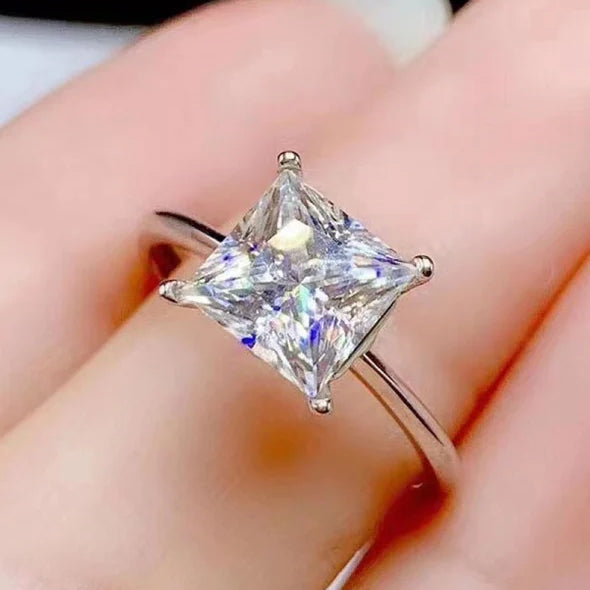
Complete Engagement Rings
Choose a ring with a diamond hand selected by a trained jeweler.


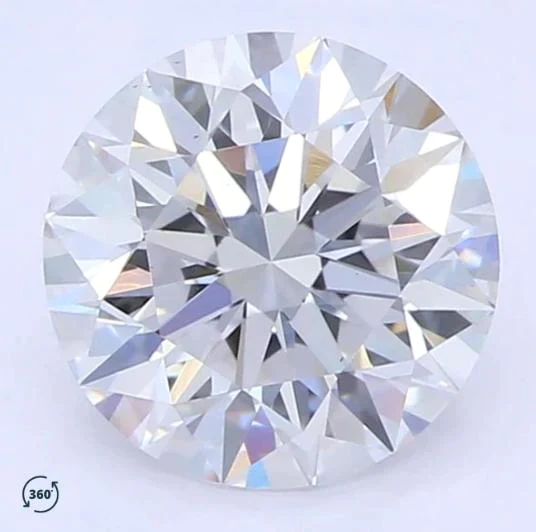
Loose Diamonds
Shop a huge selection of certified natural or lab-grown diamonds. On Sale Now!

Fashion Jewelry
Fashion rings, necklaces, bracelets & earrings. Take your style to a new level.


Comments