
Lab-Grown vs Natural Diamond: Which One Is Right for You?


Lab-grown and natural diamonds are chemically identical, but differ in how they're made, what they cost, and how people feel about them. Lab diamonds are affordable and ethical; natural diamonds have legacy and resale appeal. Choosing depends on your values, not just your budget.
Which One Should You Choose?

- Lab-Grown Diamonds: Perfect if you want the biggest, cleanest-looking diamond for your budget—think 2–3 carats instead of 1. They’re ideal for shoppers who value ethics, customization, and transparency over resale value, and who want to invest more in the design and less in the hype.
- Natural Diamonds: Best for those who are drawn to history, tradition, and symbolism. If you see your diamond as a generational heirloom or love the idea of something formed billions of years ago deep within the Earth, a natural diamond might be the right emotional fit, even if it means compromising on size or clarity for the same budget.
If you’re deciding between a lab-grown or natural diamond, especially for an engagement ring or major gift, we know the feeling.
Want the full breakdown on sparkle, symbolism, and smart shopping? Keep reading.
What’s the Real Difference Between Lab and Natural Diamonds?
Are Lab Diamonds Real?

Yes, lab-grown diamonds are 100% real diamonds.
They’re chemically, physically, and visually identical to mined diamonds. Both are made of pure carbon arranged in a crystal lattice, rank a perfect 10 on the Mohs hardness scale, and can be certified by leading gem labs like GIA or IGI.
The key difference is how they’re formed.
Natural diamonds take billions of years to develop deep within the Earth, while lab-grown diamonds are created in a matter of weeks using advanced technology like HPHT (High Pressure High Temperature) or CVD (Chemical Vapor Deposition).
We work with both types.
And we scrutinize every stone ourselves, because what’s on paper doesn’t always reflect how a diamond looks in real life. Whether it’s lab or natural, we make sure it passes the sparkle test.
Can You Tell Them Apart?
Not with the naked eye.
A well-cut lab diamond will shine just as brightly as a natural one. Even trained gemologists need specialized equipment to detect subtle growth pattern differences.
For most buyers and their partners, there’s no visible difference.
That said, lab diamonds often have fewer inclusions at a lower price point, simply because the growing conditions are controlled.
So if you're comparing a mined and lab diamond side by side, don’t be surprised if the lab option looks cleaner, even though it costs less. That’s part of what makes them such a strong value.
When you shop with us, we’ll help you compare apples to apples. Whether you're eyeing a 2-carat radiant or a 3-carat oval, we'll show you which one actually looks the best in your setting and lighting.
Pricing Breakdown: How Much Can You Really Save?
Lab-Grown = Bigger Diamonds for Less
If size matters (and let’s be honest, it usually does), lab-grown diamonds are a game-changer.
On average, lab diamonds cost anywhere from 50–90% less than their natural counterparts. That means the same budget can get you a significantly larger or higher-quality stone.
Take a 1-carat, VS2 clarity, D color natural diamond, it’ll typically run you $8,000 to $9,000.
The lab-grown equivalent?
Around $1,800 to $2,500. That’s not a small difference; it’s the kind of price gap that opens the door to dream sizes or designer settings that might’ve been out of reach before.
Many of our clients come in thinking they’ll need to “settle,” only to walk out with a 3-carat stunner that fits both their budget and their vision. Lab-grown makes that possible.
Why the Huge Price Gap?
It all comes down to supply and scalability.
Natural diamonds are rare because they take billions of years to form and require expensive mining operations to extract.
Lab-grown diamonds, on the other hand, are created in labs using advanced equipment that replicates Earth’s conditions in a matter of weeks.
As the technology improves and more suppliers enter the market, costs keep dropping, especially for larger stones.
That affordability has shifted the market dramatically. Buyers who once saw 1–1.5 carats as “big” are now comfortably shopping in the 2–4 carat range. It’s not about cutting corners; it’s about cutting through the old pricing myths.
What About Markups?
Here’s where things can get tricky.
Just because lab-grown diamonds can be affordable doesn’t mean every retailer prices them fairly. Some stores still mark up lab stones as if they’re rare, hoping shoppers don’t know the difference.
We believe in total transparency. We’ll show you exactly why one diamond costs more than another, and we’ll never upsell you on a stone that doesn’t actually deliver in brilliance, clarity, or quality.
Ethics & Environmental Impact
Lab-Grown Diamonds = No Mining
One of the biggest reasons people choose lab-grown diamonds is peace of mind.
These diamonds are created without digging up land, displacing communities, or endangering workers. There’s no open-pit mining. No deforestation. No murky supply chains.
And when powered by renewable energy, lab-grown production also leaves a significantly smaller carbon footprint.
Is the Mined Diamond Industry “Clean” Now?
The mined diamond world has made progress.
The Kimberley Process helped reduce the circulation of so-called “blood diamonds,” and many natural stones are now labeled “conflict-free.”
But let’s be real, those certifications don’t always guarantee clean hands. Issues like underpaid labor, lack of traceability, and lasting environmental damage still exist.
If ethics are part of your buying decision, lab-grown diamonds offer a clear alternative. They’re traceable from start to finish and aren’t tied to geopolitical instability or ecological harm.
Emotional Conflict
Here’s where things get personal.
Some buyers feel a natural diamond carries more meaning; it’s billions of years old, one-of-a-kind, forged deep within the Earth. That legacy appeals to people who see a diamond as more than a gemstone.
Others feel that the same depth of meaning comes from choosing a diamond that aligns with their values. No mining. No ethical compromises. Just a clean, modern start.
We honor both perspectives. Your ring should reflect your values. We’re here to help you weigh what matters most, without judgment, pressure, or outdated industry bias.
Value, Investment, and Resale: Do Diamonds Hold Their Worth?
Do Lab Diamonds Lose Value?
In short, yes.
Lab-grown diamonds typically don’t hold resale value the way some natural diamonds might. The market is still evolving, and as lab diamond supply grows and prices continue to drop each year, often by 10–25%, resale prices are declining just as fast.
But in the past 12 months, that decline has noticeably slowed. There’s growing evidence that prices are beginning to stabilize, thanks to increased demand and wider consumer adoption.
That doesn’t mean lab diamonds are a financial investment. But it does mean they’re a smart choice for people who care more about beauty, ethics, and value than about future resale.
Do Natural Diamonds Appreciate?
Not usually.
Despite what traditional jewelers might suggest, most natural diamonds don’t increase in value over time. Retail markups are steep, often 100% or more.
So even if diamond prices rise slightly, you’re unlikely to recover what you paid unless the diamond is rare, vintage, or part of a collector’s market.
While natural diamonds may retain more resale value than lab diamonds, they’re still not a reliable investment. That said, many people are drawn to their legacy appeal, something to pass down, not cash in.
Insurance and Appraisals
Both lab and natural diamonds can be insured and appraised by reputable firms. But because lab diamonds cost less to replace, your insurance premiums will usually be lower.
We help every client get a third-party appraisal for their diamond and setting, so you’re protected no matter which option you choose.
And because we only work with certified, high-quality stones, you’ll know exactly what your ring is worth from day one.
Certification, Trust, and What to Ask a Jeweler
Not All Grading Labs Are Equal

Whether you're buying a natural or lab-grown diamond, certification matters, but so does who does the grading.
Look for diamonds certified by reputable labs like GIA (Gemological Institute of America), IGI (International Gemological Institute), or GCAL (Gem Certification & Assurance Lab). These institutions use consistent standards and transparent grading methods.
A proper grading report doesn’t just list the 4Cs.
It should include diagrams showing cut proportions, polish, symmetry, and even fluorescence.
Every diamond we sell, lab or natural, is independently certified by a trusted lab and comes with documentation you can read, understand, and verify.
Watch for Sales Tricks
Here’s where things can go sideways. Some jewelers use vague terminology or hide significant details like origin and cut quality.
Others mark up lab diamonds as if they’re rare, banking on the assumption you won’t know better. And we’ve seen sellers push stones with poor light performance or visible inclusions just because they meet “minimum” standards on paper.
But we do the opposite.
We’ll walk you through what each report actually means, point out what matters to the eye (not just under magnification), and show you how to get the most beauty for your budget, without any tricks.
What to Ask Before Buying
Whether you're shopping online or in person, here are five elemental questions to ask before buying:
- Is the diamond lab-grown or natural?
- Which lab graded it, and can I see the full report?
- What’s the cut grade and light performance?
- Can I view the diamond in different lighting (including natural daylight)?
- What’s your return or upgrade policy?
These questions will help you spot red flags and ensure you're working with a jeweler who values transparency.
We believe buying a diamond should feel exciting, not confusing. That’s why we answer every one of these questions upfront. Because trust is the process.
Symbolism, Story & Sentiment: What Feels Right?
The Natural Diamond Narrative
There’s something undeniably powerful about a natural diamond.
Formed over billions of years under the Earth’s pressure, each one is a geological miracle, unique, ancient, and steeped in tradition.
For some, a natural diamond feels more “real” not because of its chemistry, but because of its origin story. It is a one-of-a-kind gift from the planet, passed down across generations.
If legacy, tradition, or the symbolism of time resonate with you, a natural diamond might feel like the truest representation of your commitment.
The Lab-Grown Modern Love Story
Lab-grown diamonds tell a different kind of love story, one that’s rooted in ethics, innovation, and individuality. These diamonds are made with intention, not extraction.
They allow you to choose something beautiful without compromise, and often without the environmental or ethical baggage of traditional mining.
They’re also incredibly customizable, perfect for couples designing something uniquely their own.
We’ve helped countless clients use lab-grown diamonds to create rings that are every bit as emotional and meaningful as their natural counterparts.
What Really Matters to You?
There’s no right answer, only your answer.
Do you want a diamond with a deep, natural past or one that reflects your modern values? Are you drawn to the idea of legacy, or excited by a new standard of beauty and ethics?
We believe the best diamond is the one that aligns with your story, not someone else's playbook.
Whether you lean traditional, modern, or somewhere in between, we’re here to guide, not push, so you end up with a ring that feels 100% right.
So, Which Diamond Should You Choose?
Lab-Grown Is Best For You If…
- You want more diamonds for your dollar, think 2 or 3 carats instead of 1.
- You care about sustainability, transparency, and ethics.
- You value design freedom over resale value.
- You’d rather invest in a unique setting than overpay for stone origin.
Lab-grown diamonds give you room to express yourself, bigger stones, cleaner specs, and full creative control over your ring without blowing your budget.
Many of our most stunning custom pieces feature lab-grown stones, precisely because clients can go bold with shape, size, and style.
Natural Might Be Better If…
- You’re drawn to the idea of owning something ancient, one-of-a-kind, and formed by nature.
- You’re gifting a legacy piece that’s meant to be passed down.
- You’re comfortable with higher costs for the symbolism and long-term perception.
Natural diamonds offer that traditional story, the “millions of years old” narrative that still holds emotional weight for many. If the idea of rarity and deep history speaks to you or your partner, there’s nothing wrong with choosing what feels timeless.
Still Not Sure?
This isn’t a one-size-fits-all decision, and that’s the point.
Over half of engagement ring buyers now choose lab-grown, but that doesn’t mean it’s the better choice for everyone. It simply means the market is evolving, and more people are realizing they have options.
Your perfect diamond depends on your values, your vision, and the story you want to tell, not on what tradition or salespeople say.
We’re here to help you compare both paths side by side. No pressure. Just honest insight and professional support. Because the best decision is one you feel great about, years from now.

Why Mikado Diamonds Is the Smart Choice
Still deciding between lab-grown and natural? You don’t have to figure it out alone.
We’re not here to push a product; we’re here to guide you toward the ring that feels right.
Whether you want the legacy of a natural diamond or the modern brilliance of lab-grown, we’ll help you compare options, decode grading reports, and understand what really matters.
Here’s what you can expect with us:
- Fair pricing with no shady markups or hidden fees
- Ethical, certified diamonds, whether lab or mined
- One-on-one support from experts who actually care about your story
- Custom ring design that’s as meaningful as it is beautiful
Because too many couples walk away from traditional jewelers feeling confused, overcharged, or unsure if they made the right choice. That doesn’t happen here.
Book a virtual consultation or explore our custom design process today. With us, you don’t just get a diamond, you get clarity, confidence, and a ring that truly reflects your values.
FAQs on Lab-Grown vs Natural Diamonds
Will a Lab Diamond Last Forever?

Absolutely.
Lab-grown diamonds are chemically and physically identical to mined diamonds. They’re composed of pure carbon in a crystal structure that ranks 10 on the Mohs scale, the highest possible for hardness.
That means a lab-grown diamond is just as durable and long-lasting as a natural one. It’ll sparkle just as brilliantly on your 50th anniversary as it did on day one.
Do Lab Diamonds Turn Yellow or Cloudy?
No, they don’t.
This is one of the most persistent myths out there. Lab diamonds are real diamonds; they won’t discolor, cloud up, or fade over time.
What people are usually thinking of are imitation stones like cubic zirconia (CZ) or moissanite, which can change in appearance with wear. Lab-grown diamonds retain their clarity and sparkle for life.
Will People Know It’s Lab?
Only if you tell them.
Lab and natural diamonds are visually indistinguishable to the naked eye. Even trained gemologists often need advanced equipment to tell them apart.
That means when someone sees your ring, they’ll see a diamond, beautiful, brilliant, and expertly set. Whether it's lab or mined is a personal choice, not a visible label.
Will My Partner Feel Disappointed?
This is a deeply personal question, and one we hear more often than you'd think.
The truth is, every couple is different. Some people still associate mined diamonds with tradition, while others see lab-grown diamonds as the more thoughtful, ethical, or modern choice.
If you’re worried about how your partner will feel, talk about it.
We often guide couples through this conversation together. Most partners care far more about the intention, the design, and the meaning behind the ring than they do about whether it came from underground or a lab.
And when they see how stunning lab diamonds look, especially in our custom settings, they’re usually blown away.
Mikado Collection
Hand Crafted Engagement Rings, Loose Natural and Lab-Grown Diamonds and a Fashion Jewelry Collection of Rings, Necklaces, Bracelets, and Earrings.

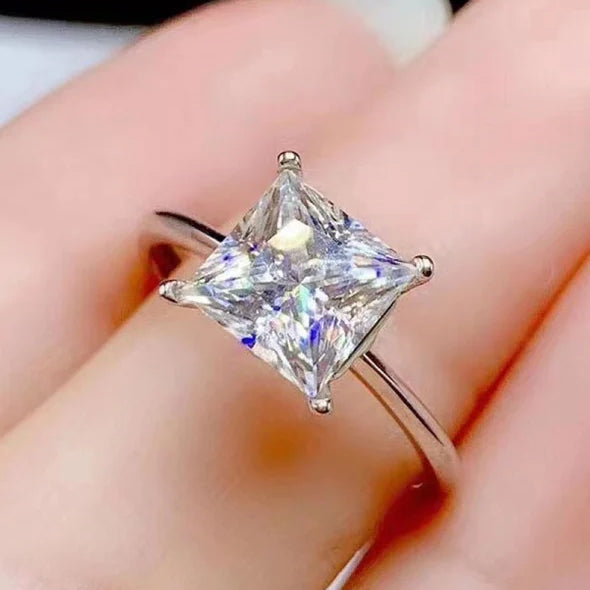
Complete Engagement Rings
Choose a ring with a diamond hand selected by a trained jeweler.

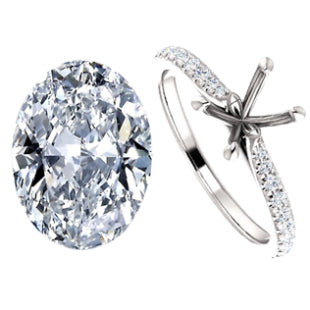

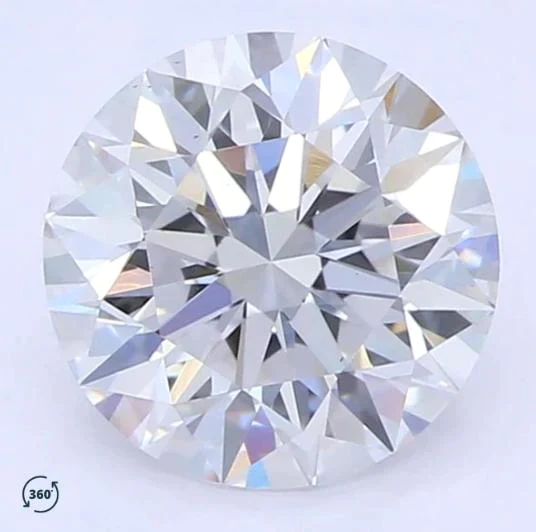
Loose Diamonds
Shop a huge selection of certified natural or lab-grown diamonds. On Sale Now!

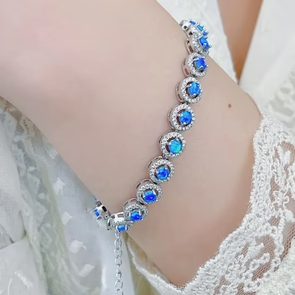
Fashion Jewelry
Fashion rings, necklaces, bracelets & earrings. Take your style to a new level.


Comments