
Can Lab-Grown Diamonds Be Detected? Expert Guide


Yes. Lab-grown diamonds can be detected. But not by the naked eye or standard diamond testers. Experts use tools like spectroscopy, UV fluorescence, and inclusions analysis.
Quick Notes:
-
Lab-grown diamonds can be detected.
-
Lab and natural diamonds look identical.
-
Detection requires trained professionals and advanced gemological equipment.
While lab-grown and natural diamonds look identical to the eye, and often even under a loupe, specialized gemological tools can reveal their origin.
From fluorescence patterns to trace nitrogen levels, detection is a science that only trained professionals can reliably perform.
So if you’re worried about unknowingly buying the wrong type of diamond, there are clear ways to protect yourself.
Whether you’re shopping for a custom engagement ring or upgrading your original stone, we make sure you know exactly what you’re getting, no guesswork.
Want to understand exactly how detection works and what tools are used? Keep reading.
Can Lab-Grown Diamonds Be Detected?

Lab-grown diamonds are, in every meaningful way, real diamonds.
They share the same chemical composition, crystal structure, and visual brilliance as their mined counterparts.
That’s what makes them such an exciting and sometimes confusing option for buyers.
But here’s the catch.
Because they’re chemically identical, standard diamond testers can’t distinguish them. Those viral pen-style testers you see on TikTok? They only measure thermal or electrical conductivity to verify if something is a diamond, not whether it’s lab-grown or mined.
Both types “pass” as real.
To truly tell the difference, you need lab-grade equipment and a trained gemologist.
Tools like spectroscopes, UV imaging systems, and microscopic growth-pattern analysis are the gold standard.
Without them, even seasoned jewelers might not know what they’re looking at.
This is why buying from a trusted source matters so much. And if a seller isn’t screening or disclosing diamond origin clearly, there’s real risk for the buyer.
Every diamond we sell, lab or natural, is certified by a leading gemological lab and disclosed with full transparency. Because no one should ever have to wonder if they got what they paid for.
Helpful Resource -> Do Lab Diamonds Test as Real? Here’s the Honest Answer
How Are Lab-Grown Diamonds Detected?

Advanced Testing Methods Used by Experts
Detecting a lab-grown diamond isn’t something a casual observer, or even a well-meaning local jeweler, can do by eye.
It requires specialized gemological tools and years of training. Thankfully, labs and professional jewelers have access to an evolving arsenal of detection technology.
Spectroscopy is one of the most common methods. Tools using UV-visible and infrared light can pick up subtle differences in how diamonds absorb and reflect light, revealing clues about how they were formed.
Photoluminescence goes even deeper, detecting atomic-level defects and trace elements like boron or nitrogen.
Raman spectroscopy can distinguish lab-grown diamonds by analyzing their molecular vibrations, while the DiamondView machine from GIA uses deep UV light to expose distinct growth structures.
Natural diamonds display angular patterns; lab-grown diamonds often show curved striations or glowing “tails” from the growth process.
Experts also use tools like the GIA iD100 or Yehuda’s Sherlock Holmes detector, which combine multiple technologies to help flag lab-grown stones quickly and accurately.
These are helpful in retail environments where undisclosed stones could slip through.
Inclusions and Growth Patterns Under Magnification
Beyond the machines, old-school microscopy still plays a crucial role. When viewed under 10x magnification or higher, trained gemologists can spot telltale growth characteristics.
For instance, CVD (Chemical Vapor Deposition) diamonds often show parallel striations, while HPHT (High Pressure High Temperature) stones may contain tiny metallic inclusions from the flux material used in their creation.
These features don’t exist in natural diamonds.
On the flip side, natural diamonds might show mineral inclusions like garnets or rutile needles, or in rare cases, even microscopic fluid bubbles from their ancient underground formation.
These “imperfections” are one of the few ways geologists can trace a diamond’s natural origin.
Ironically, some buyers become suspicious if a diamond looks too perfect.
Flawless appearance, once the ideal, now sometimes raises eyebrows. But it’s important to remember that lab-grown diamonds can, and often do, have inclusions too. Perfection is not guaranteed.
Laser Inscriptions and Certification Clarity
Most reputable lab-grown diamonds are laser-inscribed with microscopic serial numbers or codes that link back to their grading reports. These inscriptions are usually placed along the girdle and can only be seen under magnification.
Certification is the most important safeguard a buyer has. Top-tier labs like GIA, IGI, and GCAL clearly label whether a diamond is natural or lab-grown, and that designation should always be front and center on the grading report.
We never sell uncertified stones. Every diamond we offer is backed by transparent documentation, and we personally verify the match between each stone and its report.
Why Standard Testers Fall Short

What a Diamond Tester Actually Tests
Those little handheld diamond testers you see in jewelry stores, or on social media, are great at one thing: confirming if a stone is a diamond. But that’s it.
They measure thermal or electrical conductivity, which is a property shared by both mined and lab-grown diamonds.
So yes, if a lab-grown diamond is placed under a standard tester, it will “pass” with flying colors.
That’s where the confusion starts. Many buyers (and even some jewelers) mistakenly assume that passing a tester proves a diamond is natural. It doesn’t.
This is one of the most common misconceptions we hear: “If it passes the tester, it must be natural, right?” Not quite. A tester confirms that the stone is a diamond, not where it came from.
Why Some Sellers Still Get Fooled
The truth is, not every retailer is equipped, or committed, to screening every stone that comes through their doors.
Especially when dealing with melee diamonds (small stones used in pavé settings) or mounted jewelry, where testing is more difficult, it’s easy for a lab-grown diamond to go undetected.
And the consequences aren’t just reputational.
There have been lawsuits and serious financial losses when customers discovered, after the fact, that they purchased a lab-grown stone thinking it was mined. Even if it was an honest mistake, the damage to trust is lasting.
That’s why we do things differently at Mikado Diamonds. Mounted or loose, 1 carat or 10, we make sure what you’re getting is exactly what you think it is.
Helpful Resource -> Do Lab-Grown Diamonds Hold Their Value?
Lab-Grown Diamonds Are NOT “Fake”, But They Can Be Misrepresented

What “Real” Means in Gemology
Let’s set the record straight: lab-grown diamonds are real diamonds. In gemology, “real” doesn’t mean “mined.” It means the stone has the same crystal structure, hardness, and optical properties as a diamond formed underground over millions of years.
Lab-grown diamonds are not simulants like cubic zirconia or moissanite. Those are chemically different materials that merely imitate a diamond’s appearance.
Lab diamonds, on the other hand, are carbon crystallized under pressure, just in a lab instead of deep within the Earth.
In fact, lab-grown diamonds are sometimes structurally cleaner than natural ones because they’re formed in a controlled environment.
But that doesn’t mean they’re flawless, or less valuable. They’re simply a different origin story of the same gem.
When and Why Detection Matters
So if lab-grown diamonds are real, why does detection even matter?
Because transparency matters. Whether it’s for ethical reasons, resale considerations, or insurance documentation, knowing a diamond’s origin isn’t just a technicality; it’s part of its story.
Some customers want a lab-grown diamond specifically for its eco-conscious and conflict-free benefits.
Others are upgrading a mined diamond and want to preserve that classification. And for jewelers, being able to confidently identify stones, especially when handling large orders or mixed parcels, is essential for accuracy and trust.
We don’t believe in hiding or sugarcoating the origin of a diamond. Whether you choose lab-grown or mined, we think you deserve all the facts upfront, so your ring reflects both your style and your values.
How to Protect Yourself as a Buyer
Ask for Certification
The single most important thing you can do when buying a diamond, lab-grown or natural, is to ask for certification. This isn’t just a nice-to-have; it’s your proof of what you’re buying.
A legitimate grading report from a trusted lab like GIA, IGI, or GCAL will clearly state whether the diamond is natural or lab-grown, along with its cut, color, clarity, and carat weight.
Without this documentation, you’re relying purely on trust. And in a market where lab-grown diamonds are becoming harder to distinguish without advanced tools, that’s a risky move.
Many buyers quietly worry: “What if I’m being misled?”
The truth is, it’s a valid concern, especially if you’re buying from a source that doesn’t clearly disclose the diamond’s origin. That’s why certified stones should be your non-negotiable.
Shop with Reputable Jewelers
Just as important as the diamond itself is who you buy it from. Online marketplaces and shady vendors might offer a tempting price, but they often fall short on transparency.
If a seller dodges questions about certification or refuses to clarify the origin of their diamonds, walk away.
We’ve built our business around trust. We don’t pressure, upsell, or play games with half-truths.
We’re proud to say: every diamond we sell comes with clear documentation, full origin disclosure, and our specialist review. If it’s lab-grown, you’ll know. If it’s natural, you’ll know. That’s how it should be.
Understand the Price Difference
One reason lab-grown diamonds have surged in popularity?
They offer incredible value. You can often get a larger, brighter stone for the same price, or less, than a smaller natural diamond.
This isn’t because they’re lower quality. It’s because lab-grown diamonds aren’t bound by the limited supply and inflated marketing of the mined diamond industry. Lower overhead, not lower standards.
Many of our clients use that value to customize a more personal, striking design. Bigger stone. Halo setting. Colored accents. It’s your story; your ring should reflect that.
What We Believe at Mikado Diamonds

Lab-Grown = Future of Diamonds
We’ve seen firsthand how lab-grown diamonds are transforming the industry, and we welcome it. You get more carats, more sparkle, and more design freedom without compromising on beauty or integrity.
But we don’t just sell lab-grown diamonds. We certify them. We inspect them. We stand behind them. Every stone we offer comes with full transparency on its origin and lab report, because clarity matters in more ways than one.
AI Can’t Pick a Diamond. But We Can.
Some retailers are happy to let AI algorithms pick your diamond. We’re not one of them.
A diamond isn’t just about numbers on a grading report. It’s about sparkle, proportions, and feeling.
None of that can be assessed by a bot. When you work with Mikado, you get real human expertise. Because you’re not just buying a rock. You’re building a legacy.
Key Takeaways: What You Need to Know Before You Buy
-
Yes, lab-grown diamonds can be detected, but it requires expert tools and training.
-
Always ask for documentation from a recognized gem lab (like GIA, IGI, or GCAL).
-
Choose a jeweler who values transparency over tactics.
-
Lab-grown diamonds are not fake; they’re real diamonds with a modern origin.
-
At Mikado, every diamond comes with a story you can trust, and a sparkle you’ll love forever.
Ready to Shop With Confidence?

We’re here to help you find the perfect diamond, without the pressure or confusion.
-
Book a 1-on-1 consultation with a real diamond expert
-
Explore our certified lab-grown diamond collection
-
Learn more about grading, origin, and custom ring design on the Mikado blog
Let’s make your next ring unforgettable and undeniably yours.
FAQ
Can jewelers fake a natural diamond using coatings?
This is a common concern, especially with so many simulants and synthetic enhancements floating around the market.
The answer? Not successfully.
While surface treatments or coatings can sometimes alter a stone’s color or appearance temporarily, they can’t fool lab-grade detection tools.
Experienced gemologists can quickly identify these kinds of alterations under magnification or with spectroscopy. A coating might trick the eye, but it won't get past professional verification.
If you're worried about deception, the answer is simple. Stick with certified stones and a trusted jeweler who guarantees full transparency, like we do here.
Are flawed diamonds more desirable because they’re ‘real’?
Some buyers find comfort in a diamond’s imperfections. A visible inclusion, a faint color, these details can signal that a diamond came from deep within the Earth. It feels authentic. Tangible. Like proof it’s natural.
But here’s the catch.
Visible flaws aren’t a guarantee of origin, and they shouldn’t be used as your only litmus test. Lab-grown diamonds can have inclusions, too. What really matters is the certification. It’s the only reliable way to confirm a diamond’s identity.
Whether your diamond is flawless or perfectly imperfect, it’s the paperwork that backs up the story.
Can I get a lab diamond with inclusions to look natural?
Yes, you can. Lab-grown diamonds aren’t all flawless. In fact, many come with small inclusions or color tints that make them resemble natural stones even more closely.
That said, the types of inclusions differ. Natural diamonds might have mineral or fluid inclusions, while lab diamonds might show metallic particles or structured growth lines, depending on the process (HPHT vs. CVD).
So yes, you can absolutely choose a lab-grown diamond that doesn’t look “too perfect” if that’s what feels more meaningful to you.
Will insurance treat lab diamonds the same?
More and more, the answer is yes, as long as your documentation is clear. Insurance companies typically require a professional appraisal and a grading report.
As long as those documents state the diamond’s type (lab-grown or natural) and provide sufficient details for value assessment, lab diamonds are insurable just like mined ones.
Here, we can help you obtain both your certification and your appraisal so that your investment is protected no matter what you choose.
Mikado Collection
Hand Crafted Engagement Rings, Loose Natural and Lab-Grown Diamonds and a Fashion Jewelry Collection of Rings, Necklaces, Bracelets, and Earrings.

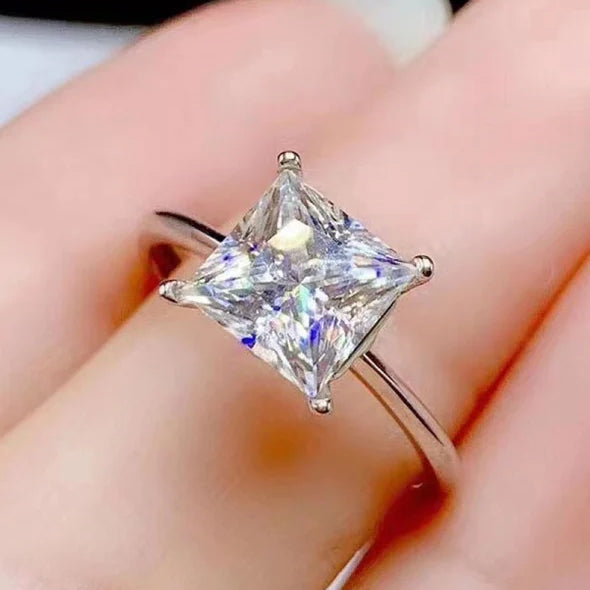
Complete Engagement Rings
Choose a ring with a diamond hand selected by a trained jeweler.


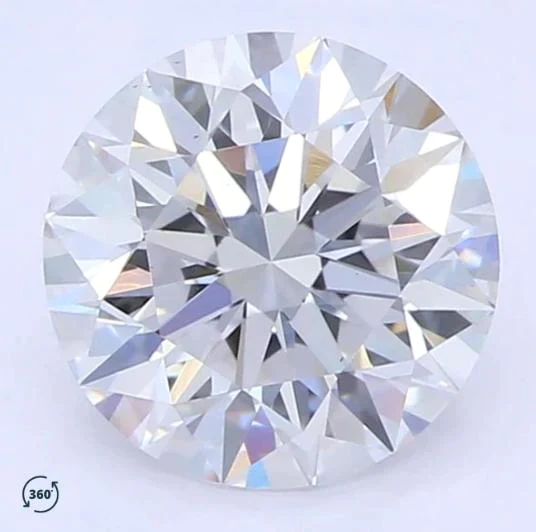
Loose Diamonds
Shop a huge selection of certified natural or lab-grown diamonds. On Sale Now!

Fashion Jewelry
Fashion rings, necklaces, bracelets & earrings. Take your style to a new level.


Comments