
Radiant Cut Diamonds: A Modern Sparkle Guide


A radiant-cut diamond engagement ring. Radiant cut diamonds are known for their trimmed corners and brilliant facet pattern that maximizes sparkle.
What Is a Radiant Cut?
The Radiant cut is a relatively modern diamond shape, first developed in the late 1970s. In 1977, master cutter Henry Grossbard set out to combine the elegant rectangular outline of an emerald cut with the dazzling brilliance of a round cut. The result, perfected by 1981, was the Radiant cut – a hybrid “brilliantized step cut” that features a rectangular (or square) shape with trimmed corners. A typical radiant cut has about 70 facets, more than most other shapes, which gives it a distinctive sparkle comparable to a round brilliant. GIA lab reports often refer to this cut as a “cut-cornered, rectangular (or square) modified brilliant,” highlighting its mixed facet style.
Radiant diamonds can be found in square proportions or more elongated rectangles, depending on the length-to-width ratio. The signature cropped corners not only give the stone a stylish octagonal outline, but also serve a practical purpose: they reduce the risk of chipping at the corners (a clear difference from the sharp corners of a princess cut). Overall, the radiant cut offers a unique blend of geometric shape and brilliant sparkle, making it a popular choice for those who want something a bit different from the classic round or cushion cut.
Radiant Cut Advantages
Radiant cut diamonds come with several appealing benefits that set them apart from other shapes:
-
Excellent Brilliance: The radiant cut is famed for its intense sparkle. With its ~70-facet brilliant arrangement, it delivers exceptional fire and brilliance (second only to the round brilliant cut among popular shapes). This means a well-cut radiant will exhibit plenty of lively flashes of white and colored light, similar to a round, but in a chic rectangular form.
-
Looks Larger for the Carat: Thanks to its shape, a radiant can appear large for its carat weight. Especially in elongated radiants, the long diagonal measurement makes the stone look bigger when set. Compared to equivalent-carat cushions or princess cuts, radiants often have more “face-up” area and can seem slightly larger. The straight edges of a radiant help fill out its outline (versus the curved sides of a cushion that shrink the outline), so you get a great spread and finger coverage.
-
Durable Corners: One practical advantage of radiants is durability. Unlike princess cuts that have pointed corners prone to chipping, the radiant’s beveled corners hold up better to daily wear. The trimmed corners are less likely to snag or crack, making the radiant cut a smart choice for those with an active lifestyle or anyone concerned about longevity of the stone.
-
Cost-Effective Value: Radiant cut diamonds tend to be more affordable per carat than many other shapes. One reason is that the radiant’s cutting style uses more of the rough diamond with minimal waste. This efficiency in cutting, combined with the fact that radiants are slightly less in demand than popular rounds or cushions, means you often pay less. In fact, industry data shows radiant cuts can be ~30% cheaper than an equivalent cushion cut and around 34% less expensive than a round brilliant of the same size and quality. They may be only marginally higher in price than princess cuts (which are among the cheapest cuts), still offering an excellent value for their brilliance.
-
Modern yet Versatile Style: A radiant diamond offers a contemporary look with its clean lines and trimmed corners, often described as a perfect blend of the emerald cut’s elegance and the round brilliant’s sparkle. It suits both square and rectangular silhouettes – you can choose a squarer radiant or a more elongated one to fit your style. This versatility means it works in many ring designs, from vintage-inspired halos to sleek solitaires. For someone who loves the idea of an emerald or Asscher cut but craves more brilliance, the radiant is an ideal compromise.
While radiants have many advantages, note that they do carry more weight in their depth (pavilion) than a round. This is common for rectangular cuts – a radiant might be a bit deeper to achieve optimal sparkle, so it can have a slightly smaller diameter than a round of equal carat. Even so, the radiant’s brilliance and other benefits often outweigh this, especially if you select a well-proportioned stone (discussed below).
Radiant vs. Cushion and Princess Cuts
Radiant cut diamonds are often compared to cushion cuts and princess cuts, since all three can be square or rectangular and have brilliant faceting. However, there are key differences in shape and sparkle that might sway your preference:
Radiant vs. Cushion Cut
A cushion cut has a soft, pillow-like shape – essentially a square/rectangle with rounded corners and sides, as opposed to the radiant’s straight edges and cut corners. This gives cushions a more vintage, romantic appearance, whereas radiants look more geometric and modern. In terms of brilliance, both can be very sparkly since both are brilliant cuts. Generally, though, a well-cut radiant is known to display slightly more brightness/white sparkle than a cushion of similar quality. Cushions often excel in “fire” (colored flashes) and have a softer glow, while radiants give off a bold, bright scintillation.
In size appearance, radiants often have the edge. Because cushion cuts have rounded sides that curve inward, some of the potential outline is lost – a cushion may appear a bit smaller than a comparably weighted radiant. A radiant’s straight sides reach out to the corners, so it tends to face-up larger than a cushion of the same carat weight. Both shapes can be found in elongated versions, but if you want maximum visual size, a radiant (especially a longer one) will usually look slightly bigger than a cushion.
Style-wise, cushion cuts are beloved for their antique feel and are common in vintage-inspired settings, whereas radiants project a more contemporary glamour. Neither is “better” – it comes down to whether you prefer the cushion’s soft, curved corners or the radiant’s crisp, trimmed corners. Notably, both shapes are quite durable (no sharp points); a cushion’s rounded corners and a radiant’s beveled corners both resist chipping well. In terms of cost, cushions have been very popular in recent years, which can make them pricier. Radiant cuts, being less mainstream, often cost less than cushions – by some estimates, choosing a radiant could save you around 20–30% compared to a cushion of similar size and quality.
Radiant vs. Princess Cut
Comparison of the radiant cut (left) vs. the princess cut (right). Note the radiant’s clipped (beveled) corners and octagonal outline, versus the princess’s perfect square shape with pointed corners.
The princess cut is another popular square-shaped diamond, but it differs markedly from the radiant. The princess is a sharp-edged square – it has four 90° pointed corners and a distinct facet pattern that forms an “X” when viewed top-down. In contrast, the radiant has cropped corners, forming an eight-sided shape. The beveled corners give the radiant a slightly softer outline (no sharp points) and also make it sturdier; princess corners are vulnerable to chipping, whereas radiants avoid that issue. If durability is a concern or you plan to wear the ring daily, a radiant offers peace of mind over a princess cut for that reason.
When it comes to brilliance, both princess and radiant cuts are highly brilliant and sparkly – they are both modified brilliant cuts after all. Diamond experts often note that a radiant will reflect slightly more light than an equally well-cut princess, giving it an edge in overall brilliance. The radiant’s facet arrangement (70 facets) is geared toward maximizing light return, similar to a round, whereas a modern princess cut typically has about 76 facets in a distinct pattern. In practice, a top-grade princess can be extremely brilliant too, but on average a radiant’s sparkle is a bit more “fiery” and dynamic. Also, princess cuts have a larger table facet on top, which can sometimes make inclusions more visible; radiants, with a slightly smaller table and more mixed facet pattern, hide imperfections well.
For appearance, shape matters as well: princess cuts are always square (length-to-width usually 1.00 to 1.05), while radiants are often cut in more rectangular proportions. A typical radiant might have a ratio around 1.2 to 1.3, giving it an elegant elongated look. This means in a ring, a radiant might cover more of the finger lengthwise. In fact, the elongated shape of a radiant can make it look larger than its carat weight suggests, due to a bigger diagonal measurement across the stone. A princess, being perfectly square, “looks its weight” with no elongation. So if you like a more vertical, finger-flattering shape, a radiant wins; if you prefer a perfect square outline, you might lean princess or a square radiant.
In terms of price, both shapes are more affordable than rounds. The princess cut, in particular, is known as one of the most cost-effective shapes because it preserves so much of the rough (little waste when cutting). Radiant cuts similarly use a large percentage of the rough, translating to great value as well. Typically a radiant of a given carat will cost slightly more than a princess (one analysis found ~10% more) because princess cuts are extremely popular and abundant. Even so, radiants are still much cheaper than rounds and not far off from princess prices. For example, a radiant might be about one-third less expensive than an equivalent round diamond. So if budget is a priority, both princess and radiant are smart choices – with the radiant offering a more unique look for roughly comparable cost.

Quality Tips for Radiant Diamonds
Buying a radiant cut diamond requires a bit more attention to cut quality and proportions, since gem labs (like GIA) do not assign an official cut grade for fancy shapes. Here are some tips to ensure you get a beautiful radiant diamond:
-
Cut and Proportions: Because there’s no GIA cut grade for radiants, evaluate the cut through its specs and visuals. A well-proportioned radiant will usually have a depth around 62%–68% and a table around 58%–66%. Stones much deeper than ~70% will hide weight in the pavilion (making the diamond look smaller than it should). On the other hand, stones that are too shallow (depth under ~57%) might suffer from light leakage (a “fisheye” effect where the center appears glassy). Aim for a medium depth – it balances brilliance and size. Similarly, an extremely large table (>70%) could mean a flat-looking stone, while a very small table (<55%) might indicate an overly steep crown. The sweet spot ranges can help, but remember that each radiant is unique – two diamonds with similar numbers can perform differently. It’s wise to view actual photos or videos if buying online, to judge how lively and well-cut the stone appears.
-
Symmetry & Shape Appeal: Look for a radiant that has pleasing overall shape and good symmetry. The outline should appear rectangular or square (as you prefer) without any bulges or wonky, uneven sides. Check that the corners are evenly trimmed and not overly wide or too narrow. Poor symmetry or misaligned facet patterns can make the diamond look “off” or out-of-balance. Most retailers list symmetry and polish grades – try to stick with at least “Very Good” or “Excellent” symmetry and polish for a radiant. Shape preference is personal: if you want a square radiant, look for length-to-width roughly 1.00 to 1.05; for a classic rectangular radiant, ratios in the 1.15 to 1.35 range are very popular. Avoid extremes unless that’s your intent (ratios above 1.4 will look very long and narrow). A nicely balanced ratio (not too elongated or too squat) tends to have the best sparkle distribution.
-
Even Brilliance (No “Dark Corners” or Bowties): When examining a radiant cut, pay attention to its light performance across the entire stone. Well-cut radiants should show sparkle uniformly, from center to corners. Avoid stones that have large dull or dark areas, which can happen in poorly cut examples. For instance, elongated radiants (and other ovals/marquises) can exhibit a “bow-tie” – a dark band across the middle – if the facet alignment isn’t optimal. Also be cautious of any radiant that shows noticeably darker corners or patches of light leakage. A bit of contrast pattern is actually good (the eye needs some dark areas to make the bright facets pop), but it should be evenly distributed. You don’t want concentrated blank spots that draw the eye. View the diamond face-up and tilt it slowly; ensure it sparkles across the entire face without any dead zones. Checking videos or idealscope images (if available) can help confirm that there are no big light leakage areas. In short, look for a radiant that is full of life, with no distracting dark spots.
-
Clarity Considerations: One great thing about the radiant cut is that its brilliant facet pattern hides inclusions quite well. The flurry of reflections can mask small flaws, especially compared to step-cut stones like emerald cuts. This means you can often drop down to an SI1 or VS2 clarity and still have an eye-clean diamond, which saves money. Unless you have a giant radiant or one with very large, obvious inclusions, a high clarity grade (VVS or IF) isn’t usually necessary. We recommend focusing on finding a stone that’s “eye-clean” – no visible inclusions to the naked eye – rather than obsessing over the microscopic clarity grade. Many radiant diamonds in the SI range will face up perfectly clean, especially if the inclusions are small or off to the side. Always review the clarity plot or magnified images if available. But rest assured that a well-cut radiant of modest clarity can still look flawless once mounted, so this is a shape where you have some flexibility to save on clarity.
-
Color Considerations: Radiant cuts tend to show color tints a bit more than rounds, but slightly less than some other fancy shapes. The brilliance helps mask color to an extent, yet the corners and deeper pavilion can retain color if it’s a lower grade. A common recommendation is to stick with G or H color or higher for a radiant cut if you want it to appear truly colorless in most lighting. That said, many people go lower (I or even J) and still have a beautiful looking diamond, especially if set in a warm metal like yellow or rose gold. One tip: if considering a J/K radiant, examine if there is any visible concentration of warmth in the stone’s ends or corners (sometimes elongated cuts show a little more color at the tips). If the color is evenly distributed and the face-up looks white to your eye, you can get a great value with a slightly lower color. Brilliant vs. “Crushed Ice”: Note that radiants come in two faceting styles – some have a traditional brilliant look with distinct facet flashes, others have a “crushed ice” appearance (lots of tiny sparkles). Crushed-ice radiants might show color a bit more, as they lack bold contrast patterns that can mask yellow tint. If you choose a crushed-ice radiant, consider staying in the near-colorless range (G-H) for best results. In any case, color is also about preference and setting – an I-color radiant in a yellow gold halo can still look dazzling and white thanks to the ring design.
In summary, focus on finding a well-cut, well-proportioned radiant with brilliance across the face. Don’t worry if the certificate lacks a cut grade; rely on images, videos, and expert advice. A radiant that is lively and well-balanced will perform beautifully, and often you can prioritize cut while being flexible on clarity (and slightly on color) to maximize your budget’s impact.
Radiant Cut Pricing & Value
One of the reasons the radiant cut is gaining popularity is its price-to-sparkle ratio – you can often get a larger or more brilliant diamond for the same budget by choosing a radiant. There are a couple of factors behind the radiant’s pricing advantage:
-
Cutting Efficiency: The radiant cut was designed with efficiency in mind. Its facet arrangement allows diamond cutters to use most of the original rough stone, with very little wasted material. In comparison, rounds and some fancy cuts lose more weight in the cutting process. This efficiency means a 1 carat rough can yield a larger finished diamond when cut into a radiant than it might as a different shape. As a result, radiant diamonds tend to cost less per carat than rounds, and are often cheaper than cushions too. For example, industry analyses have found that a radiant of a given size could be roughly 34% lower in price than an equivalent round brilliant. And whereas princess cuts are the absolute cheapest shape (due to very high rough yield), radiants are not far behind – one source noted a radiant is only about 10% more in price than a princess cut of same specs. In practical terms, if a 1 carat G SI1 round costs $6000, a similar radiant might be around ~$4000–$4500 (this is an illustrative estimate, actual prices vary). That difference can be thousands of dollars saved, or it allows you to afford a larger carat size for the same money.
-
Lower Demand = Lower Price: Radiant cuts make up only a small percentage of diamond sales (around 2% in recent years). They are a bit of a “hidden gem” – loved by those in the know, but not as ubiquitous as rounds, ovals, or cushions. This lower demand can work in your favor: less popular shapes often carry a price discount. Jewelers are sometimes willing to sell fancy shapes like radiants at a better price to move inventory, whereas rounds (always in high demand) command a premium. Additionally, cushion and princess cuts have been very trendy, so nice stones in those cuts can be pricier simply due to popularity. Radiant, being off the beaten path, can offer truly excellent value for the sparkle it delivers. It’s not “cheap” by any means, but you may find that your budget goes further with a radiant cut engagement ring than it would for an equivalent cushion or princess.
-
Lab-Grown Radiant Options: To maximize value, consider the growing availability of lab-grown radiant diamonds. Lab-created diamonds are real diamonds that typically cost 50–70% less than natural diamonds of the same size and quality. Radiant cuts are readily found in lab-grown options from many retailers. Choosing a lab-grown radiant can be a budget game-changer – for example, you might afford a 2 carat lab radiant for the price of a 1 carat natural. The lab stones have identical brilliance and beauty since they’re the same crystallized carbon, just grown in a controlled setting. This means you can get that stunning radiant sparkle for a fraction of the price, making bigger sizes or higher specs attainable at lower cost. If your goal is exceptional sparkle per dollar, a lab-grown radiant is hard to beat. Just be sure to buy from a reputable source and get proper certification (IGI, GIA, etc., for lab stones).
In conclusion, the radiant cut diamond offers a compelling mix of modern style, robust brilliance, and value. Its origin as a hybrid of step-cut and brilliant-cut traditions gives it a special place in the diamond world. Whether you’re drawn to its dazzling sparkle, appreciate its more durable design, or simply love that you can get a larger-looking stone for less money, the radiant cut is well worth considering for your engagement ring or jewelry. With the added option of lab-grown radiants providing even more bang for your buck, a Radiant Cut truly lives up to its name – delivering radiant sparkle with a modern twist, and often at a price that will make you (and your wallet) shine with delight.
Mikado Collection
Hand Crafted Engagement Rings, Loose Natural and Lab-Grown Diamonds and a Fashion Jewelry Collection of Rings, Necklaces, Bracelets, and Earrings.

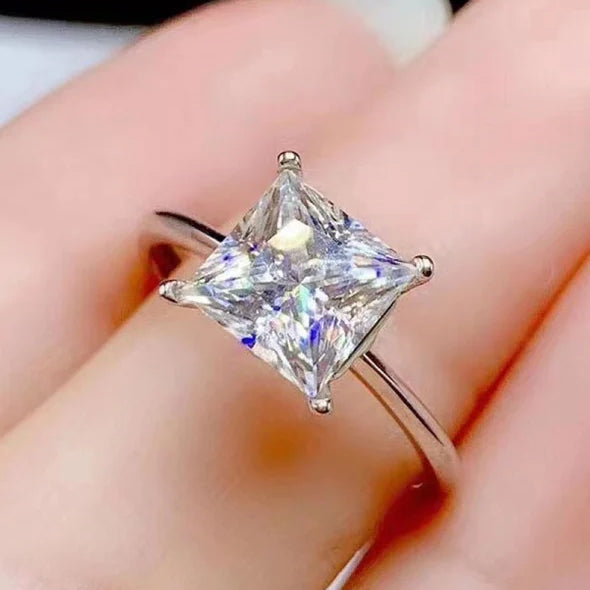
Complete Engagement Rings
Choose a ring with a diamond hand selected by a trained jeweler.


Loose Diamonds
Shop a huge selection of certified natural or lab-grown diamonds. On Sale Now!

Fashion Jewelry
Fashion rings, necklaces, bracelets & earrings. Take your style to a new level.


Comments