
Emerald Cut Diamonds: Timeless Elegance Buying Guide


Emerald cut diamonds have an understated elegance rooted in their unique shape and facet style. Unlike the fiery sparkle of round brilliants, the emerald cut offers a sleek "hall-of-mirrors" effect – broad flashes of light reflecting off its long, step-cut facets. This cut’s history traces back to the Art Deco era, prized for its clean lines and vintage glamour, and it remains a favorite for those seeking a sophisticated, retro-inspired look. In this guide, we’ll explore what makes the emerald cut special, its pros and cons, how to choose a high-quality stone, and why it can offer excellent value (especially with lab-grown options).
An elegant emerald cut diamond engagement ring. The emerald cut’s broad facets and rectangular shape create a distinctive, mirrored sparkle (a “hall of mirrors” effect) that many find timeless and refined.
What Is an Emerald Cut Diamond?
An emerald cut diamond is a rectangular step-cut stone with beveled (cropped) corners. It typically has 57 facets arranged in parallel rows on the crown and pavilion, rather than the triangular facets of brilliant cuts. These facets are like a set of steps (hence step-cut), producing broad, uninterrupted reflections. When you gaze into an emerald cut, you see deep into the stone – a shimmering hall of mirrors as light bounces within its large, open table and step-like facets.
Because of this faceting style, emerald cuts emit less scintillating sparkle compared to cuts like rounds or princess cuts. Instead of a burst of tiny flashes, you get broad flashes of light and a glassy luster. This subdued sparkle is part of the emerald cut’s old-world charm and opulence. The shape is often elongated (much longer than it is wide), though some emerald cuts can be more square-ish (approaching an Asscher cut style).
Notably, the corners of an emerald cut are trimmed (cropped). These beveled corners serve a practical purpose: they prevent sharp points that could be prone to chipping, adding durability to the diamond. The elongated shape and trimmed corners also give the stone its iconic geometric appeal, commonly associated with vintage Art Deco jewelry. Emerald cut diamonds exude a blend of timeless elegance and modern simplicity, making them popular in both antique-style and minimalist ring settings.
Emerald Cut Pros & Cons
Like any diamond shape, emerald cuts come with advantages and trade-offs. Understanding these pros and cons will help you decide if this cut matches your style and priorities:
-
Pros – Elegance, Size & Value: One of the biggest pros is the emerald cut’s refined, elegant look. The broad flashes and mirror-like facets have a classy, sophisticated sparkle that stands out from flashier brilliant cuts. Thanks to a large table and shallow depth, an emerald cut appears larger face-up than many other shapes of the same carat weight. For example, a 1 carat emerald cut might have a longer length (around 7mm × 5mm) versus a 1 carat round (~6.5mm diameter), giving more finger coverage. Another pro is value: emerald cuts are often more affordable per carat than popular brilliant cuts. They waste less of the rough diamond during cutting and face slightly lower demand, making them one of the least expensive cuts on a price-per-carat basis. In one market comparison, a 1.00 ct H color, VS2 clarity emerald cut cost ~35% less on average than an equivalent round brilliant. This means you can either save money or get a larger or higher-quality emerald cut for the same budget as a smaller round.
-
Cons – Lower Sparkle & Visibility of Flaws: The flip side of the emerald cut’s subtle sparkle is that it lacks the brilliance of cuts designed for maximum fire (like round, princess or cushion). If you love a highly fiery, scintillating diamond, the emerald cut’s restrained sparkle might feel too subdued. Additionally, the broad, open facets that create its hall-of-mirrors look also mean inclusions (internal flaws) are more visible. Brilliant cuts can hide imperfections in a flurry of light, but an emerald cut’s clear facets are like windows into the stone. Even small inclusions or color tints that would go unnoticed in a round cut can stand out in an emerald cut. This makes clarity and color (discussed below) especially critical. Another consideration is availability: emerald cuts are less common than rounds or ovals. They’re a niche choice, comprising only a single-digit percentage of diamonds sold (industry estimates put emerald cuts around 3–5% of the market). As a result, jewelers and online retailers typically carry fewer emerald cut options than they do round brilliants. You may have a smaller selection to choose from, especially if you have very specific size or quality criteria. Lastly, because of the reduced sparkle, emerald cut rings may need more frequent cleaning – any dust or film on the underside can be more obvious when a diamond isn’t super sparkly to begin with.
In summary, the emerald cut is loved for its timeless, elegant appearance, large face-up size, and relative value, but it’s not as flashy and demands higher purity (clarity/color) to look its best. Next, we’ll delve into those clarity and color considerations.
Clarity & Color Importance for Emerald Cuts
Clarity is arguably more important for emerald cut diamonds than for any other common shape. Why? The emerald’s expansive, transparent facets do little to hide inclusions. In a round brilliant, the intense sparkle can mask a small crystal or feather inclusion – often a well-cut round with SI1 clarity can still appear “eye-clean” (no flaws visible to the naked eye). This isn’t the case for emerald cuts. With their slower scintillation and huge table facet, any tiny imperfection can be visible if it’s in a prominent spot. As one jewelry guide notes, “emerald cuts don’t hide inclusions as well... you’ll have to choose one with a higher clarity grade”.
Recommended Clarity: For emerald cut diamonds, experts often suggest starting at VS2 clarity or higher to ensure an eye-clean stone. VS2 (Very Slightly Included) means any inclusions are minor and usually not visible without magnification. Many VS2 emerald cuts will appear clean to the naked eye, especially under 2 carats. If the diamond is larger (2+ carats) or the inclusion is dark and near the center, you might need to go up to VS1 or even VVS range for complete peace of mind. The key is to inspect the diamond closely (either in person or through magnified images/video) to ensure no obvious black spots or fractures disrupt that beautiful hall-of-mirrors. The goal is a crystal-clear interior, because any flaw will be essentially on display.
Color is another critical factor. Emerald cuts tend to show color tints more readily than brilliant cuts. Again, it’s because they return light in larger, less dispersed flashes. In a well-cut round, even a near-colorless I or J color can face up pretty white, as the brilliant faceting scatters light and dilutes yellow tints. In an emerald cut, however, the body color is more visible – any warmth can concentrate under those broad facets. For a colorless look, you’ll want a higher color grade on average. Many recommend starting at H color or better for emerald cuts, especially if set in white metal. An H or G color emerald cut will appear icy-white in most cases, whereas a J might show a faint yellow tint when viewed from the side or through the table. If you plan to set the diamond in yellow or rose gold, you can be a bit more flexible (the setting’s tone can mask some warmth), but in platinum/white gold settings, stick to the near-colorless or colorless range (G, H, or higher) for the best appearance.
In short, aim for higher clarity and color grades with emerald cut diamonds than you might with other shapes. A safe starting point is around VS2 clarity and H color (or better), adjusting upward for larger sizes or if you’re very color-sensitive. This ensures your emerald cut will look eye-clean and bright, allowing its elegant shape and flashes to take center stage.
Choosing the Right Emerald Cut – Proportions & Cut Quality
Choosing a stunning emerald cut diamond involves more than just the 4Cs of the report; you also need to consider the stone’s proportions and overall cut quality. Unlike round diamonds, fancy shapes like emerald cuts don’t receive an official GIA cut grade. That means it’s up to the buyer (and the jeweler) to assess whether a particular stone is well-cut for maximum beauty. Here are some guidelines on what to look for:
-
Length-to-Width Ratio: Emerald cuts can range from almost square to very elongated. The L/W ratio is simply the length divided by the width. A classic emerald cut has a graceful rectangular shape, often with a ratio in the 1.30 to 1.50 range. Most people find a ratio around 1.40 ideal – it’s nicely balanced (not too skinny, not too square). A ratio closer to 1.20 will appear noticeably stubby or overly square for an emerald (note: a truly square step-cut is usually classified as an Asscher cut or “square emerald”). On the other hand, ratios above ~1.60 will look very long and narrow, which some love for its drama. It really comes down to personal taste – do you prefer a long, elegant rectangle or a closer-to-square, modern look? Keep in mind that very extreme ratios may affect how the diamond looks in certain settings (a very elongated stone can seem thinner on the finger). Many buyers opt for the classic range to ensure the emerald cut retains its iconic appearance. If possible, view the diamond’s shape (many sites have face-up images or videos) to confirm the outline appeals to you.
-
Depth and Table Percentages: The depth % (how deep the stone is relative to width) and table % (width of the top facet relative to width) are useful indicators of cut quality. Emerald cuts are often cut deeper than rounds, but excessively deep stones will face-up smaller (hiding weight in the bottom) and may appear dark. Conversely, overly shallow stones can have a “window” effect (where the center looks transparent like glass). As a general rule, look for an emerald cut with a depth around 60–70%. Many experts suggest staying below ~74% depth. For table size, something in the mid 60% range (roughly 60–68%) is often ideal – a large table is part of the emerald cut look, but if it’s too large relative to depth, the stone might lack life. In summary, seek a well-balanced cut: not too deep or shallow. For example, one guide recommends emerald cuts with depth under 74% and a length-to-width ratio between 1.30 and 1.60 for a beautiful result. While numbers are helpful, viewing the stone (or its ASET/ideal-scope image) is even better to ensure it has that crisp hall-of-mirrors brilliance without dead spots.
-
Symmetry & Polish: Since GIA doesn’t assign an overall cut grade, pay attention to the symmetry and polish grades on the report. Ideally, both should be Good, Very Good, or Excellent (avoid any stone with “Fair” or “Poor” in symmetry/polish). Good symmetry means the facet alignment and corner cropping are even, contributing to a pleasing, balanced look. In an emerald cut, even slight asymmetry can be noticeable – e.g. if one end of the rectangle is wider, or a facet is misaligned, the reflection pattern might look “off.” Excellent polish ensures a glassy shine on those large facets, enhancing the mirror effect.
-
Assessing the Look: Because emerald cuts have unique light performance, it’s invaluable to see the diamond in person or through magnified videos before finalizing. Tilt it and observe: do you see strong bright flashes and crisp reflections (good!), or large dark areas and a lifeless center (not so good)? Some emerald cuts show a prominent dark band that sweeps across when you rock the stone – this could be the so-called “bow-tie” or just how light is reflecting; as long as it’s not static, it can be part of the charm. Also check for any obvious window (transparent glassy area when looking face-up). High-quality emerald cuts will exhibit a beautiful pattern of light and dark areas that shift like mirrors as you move the stone, with minimal vacant or dull zones.
By paying attention to these cut details – shape appeal, depth/table, symmetry, and overall light performance – you can select an emerald cut diamond that truly maximizes the beauty of this faceting style. When in doubt, consult an expert or a gemologist who can help evaluate an emerald cut’s specifics.

Price & Value: Emerald vs. Other Cuts (and Lab-Grown Options)
One of the compelling aspects of emerald cut diamonds is their price advantage relative to some other shapes. As mentioned, emerald cuts tend to be cheaper per carat than round brilliants or other highly popular cuts. This comes down to supply and demand as well as cutting efficiency. Diamond cutters can save more of the rough crystal when creating an emerald shape (less wastage than a round), and consumer demand for emerald cuts is lower than for rounds/princess cuts, which drives prices down a bit. For buyers, this means you often pay significantly less for an emerald cut of a given size and quality. For example, a 1 carat H VS2 emerald cut might be thousands of dollars cheaper than a 1 carat H VS2 round. That difference (one analysis found ~35% lower price on average) can be repurposed into getting a larger diamond or improving color/clarity while staying in budget.
Lab-Grown Emerald Cuts: In recent years, lab-grown diamonds have become a popular way to get even more bang for your buck, and emerald cuts are no exception. Lab-grown emerald cut diamonds are chemically identical to mined ones, but they come at a steep discount since their supply can be created in a laboratory. It’s not uncommon to see lab-grown diamonds priced 50-70% less than equivalent natural diamonds. In fact, some reports indicate lab diamonds can cost 80-90% less in certain cases. As an eye-opening example, a 2-carat, excellent-quality lab-grown emerald cut might cost on the order of just $\sim1,800 dollars, whereas a similar 2-carat natural emerald cut could be around $30,000. That is a massive price difference. What it means for consumers is that opting for lab-grown can let you afford a much larger emerald cut diamond or higher specs without breaking the bank. If you’ve dreamed of a big, glamorous emerald-cut center stone, lab-grown options make those sizes far more attainable for a given budget.
Do keep in mind, natural diamonds tend to hold resale value better (lab diamonds’ value has been dropping as technology improves), but if resale isn’t a concern, lab diamonds offer incredible value for daily wear. Whether mined or lab-created, you’ll still want to apply the same selection criteria (good clarity, cut, etc.) for an emerald cut.
Comparing Value: Overall, emerald cuts offer a strong value proposition. You get a diamond that looks larger than its carat weight, often costs less than other shapes, and has a very distinctive look. With a natural emerald cut, you might save money compared to a round of equal weight. With a lab-grown emerald cut, you can supercharge that value – possibly affording a stone twice the carat weight (or more) for the same price as a smaller natural diamond. For example, instead of a 1.0 ct natural, one could get a 2.0+ ct lab-grown emerald cut for similar cost. This ability to “go big” on a budget is appealing to many modern buyers, especially since emerald cuts in larger sizes really showcase that hall-of-mirrors beauty.
Finally, remember that emerald cut diamonds, while not as universally sought-after as round brilliants, have a dedicated following. Their niche popularity (roughly 5% of the market) means choosing one is a bit off the beaten path – a great way to have a ring that stands out as unique and timelessly elegant. And with the right approach to quality and selection, an emerald cut diamond will reward you with its distinctive charm for a lifetime.
Mikado Collection
Hand Crafted Engagement Rings, Loose Natural and Lab-Grown Diamonds and a Fashion Jewelry Collection of Rings, Necklaces, Bracelets, and Earrings.

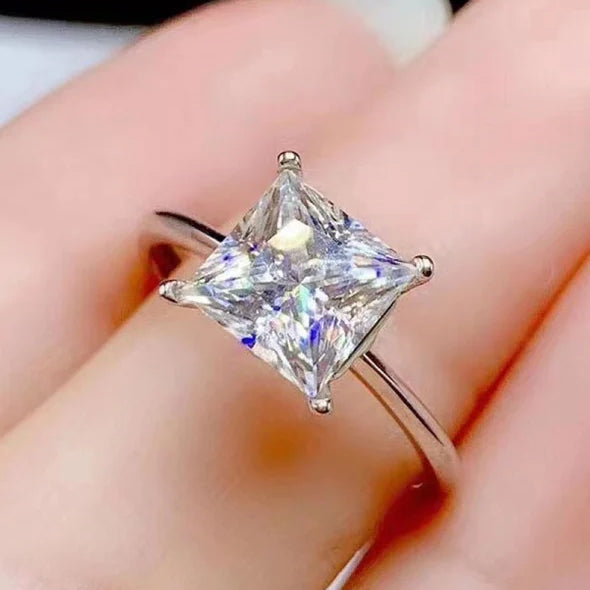
Complete Engagement Rings
Choose a ring with a diamond hand selected by a trained jeweler.


Loose Diamonds
Shop a huge selection of certified natural or lab-grown diamonds. On Sale Now!

Fashion Jewelry
Fashion rings, necklaces, bracelets & earrings. Take your style to a new level.


Comments