
Princess Cut Diamonds: Sparkle, Style & Smart Buying Guide | Mikado Diamonds


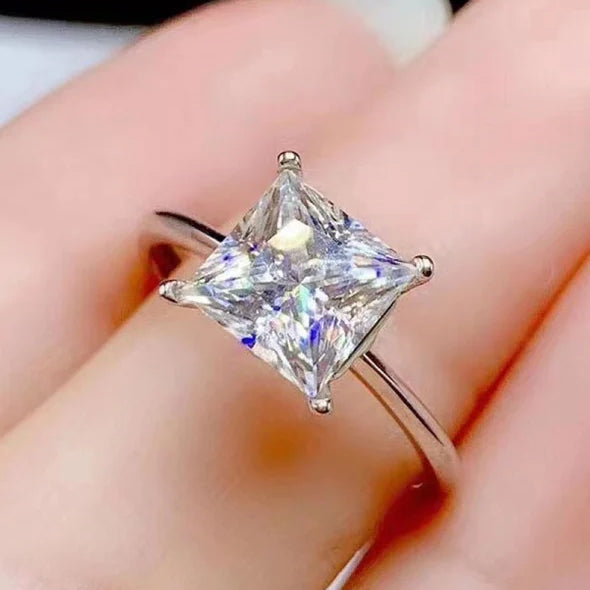
A princess cut diamond solitaire engagement ring showcases the modern square shape and brilliant sparkle of this cut. Princess cut diamonds are consistently one of the most popular diamond shapes, second only to the classic round brilliant. They offer a striking modern look with their sharp, square silhouette, while still delivering exceptional fire and brilliance. One of the biggest appeals of the princess cut is its value – these diamonds often cost significantly less than rounds of similar size and quality, giving you more sparkle for your budget. In this guide, we’ll explore what makes the princess cut special, how it compares to other shapes, why it’s an affordable choice, tips for choosing a high-quality stone, and the best ring settings to showcase a princess cut diamond.
What Is a Princess Cut Diamond?
A princess cut is a square (occasionally slightly rectangular) diamond cut with pointed 90° corners and a brilliant faceting style. It is essentially designed from an inverted pyramid of the rough crystal, maximizing brilliance in a square shape. Unlike step-cut squares like emerald or Asscher cuts, a princess cut has a modified brilliant facet arrangement similar to a round brilliant, which gives it outstanding sparkle and fire. In fact, the princess is often considered the most brilliant of the square-shaped diamonds. Typically, a princess cut has roughly 50 to 58 facets (split between the crown and pavilion), often arranged in 2 to 4 “chevron” patterns that create its dazzling scintillation. (Some modern variations may have even more facets – up to 70 or more – but 57–58 facets is common for a standard princess cut.)
The princess cut is a relatively newer diamond shape in historical terms. It was first developed in the early 1960s by London diamond cutter Arpad Nagy, who initially called it the “Profile” cut. Throughout the 1970s and early 1980s, other cutters refined the design (with variations like the Barion and Quadrillion cuts), and by the 1980s the princess cut had surged in popularity. Today, it remains the second most popular diamond shape for engagement rings (after the round brilliant), cherished for its blend of contemporary style and brilliant sparkle. On gem lab reports (e.g. GIA certificates), a princess cut may be labeled as a “square modified brilliant,” which is just the technical term for this shape. The finest princess cuts are perfectly square (length-to-width ratio close to 1.00), as this symmetry best showcases their brilliance. Overall, a princess cut offers the best of both worlds – a chic, angular look paired with brilliant-cut sparkle.
Princess Cut vs. Other Diamond Cuts
When comparing a princess cut to the traditional round brilliant (or other shapes), there are several key differences in performance and appearance:
-
Brilliance and Sparkle: A well-cut princess diamond can come very close to the round brilliant in terms of sparkle. Both are brilliant cuts that reflect lots of light. Round cuts still have the edge as the sparkliest of all shapes (thanks to their ideal light dispersion), but the princess is the most brilliant of the fancy shapes and can appear nearly as fiery to the eye. In essence, you won’t be sacrificing much sparkle by choosing a princess over a round – it’s more a matter of shape preference (the classic round vs. the modern square look).
-
Shape and Style: The princess cut’s sharp square shape with pointed corners gives it a contemporary, edgy elegance compared to the classic, timeless circle of a round diamond. Many people love the clean lines of a princess cut for a modern aesthetic that still feels luxurious. Visually, a princess cut of a given carat weight will have a different face-up profile than a round. The princess’s square outline means it may have a bit smaller top surface area (crown) than a round of equal weight, since rounds are wider across their diameter. However, the princess cut’s diagonal measurement (corner-to-corner) is actually longer than a round’s diameter – in fact, corner-to-corner a princess is about 15% greater than the diameter of an equivalent round. This gives princess diamonds an illusion of being larger when viewed at an angle, and many wearers feel a princess cut “faces up” about as big as a round. In practical terms, the princess cut offers a bigger look for less money (as we’ll discuss), which is a huge draw for budget-conscious buyers.
-
Cost and Value: One of the biggest differences is price. Princess cut diamonds are typically 20%–30% less expensive than round diamonds of the same carat, color, and clarity grade. The price gap is entirely due to how the diamonds are cut from the rough. Rounds are more wasteful to cut, whereas princess cuts utilize the rough stone far more efficiently (often doubling the yield, as explained in the next section). This means you can get a larger princess cut for the same budget, or simply save money by choosing a princess over a round of the same size. For those on a budget, the princess cut is a brilliant alternative that delivers comparable beauty without the premium price tag.
-
Durability (Corners): A notable disadvantage of the princess cut relative to round or oval shapes is its pointed corners. The four sharp corners of a princess diamond are vulnerable to chipping if knocked or not properly protected. In contrast, a round has no corners and thus is less prone to such chips. However, this risk is easily managed by choosing a protective setting (prongs that cover the corners, or a bezel) and by avoiding stones that have significant inclusions near the corners (since a fracture or inclusion at a corner makes it weaker). With the right precautions (e.g. V-tip prongs securing each corner), a princess cut can be worn safely for a lifetime – but it’s something to be aware of, especially for those with very active lifestyles or if the diamond is exposed on the edges.
-
Color and Clarity Considerations: Because of differences in faceting, round brilliants tend to hide slight body color better than princess cuts. The princess’s large, open table and slightly lesser light return means color can show a bit more, especially in the corners of the stone. In side-by-side comparisons, a J-color round may appear whiter than a J-color princess. For this reason, experts often suggest going a tad higher in color for princess cuts than you might for a round, to ensure a white appearance (more on that below). On the other hand, both round and princess cuts are quite good at masking small inclusions thanks to their brilliant facet pattern. A princess cut will hide inclusions almost as well as a round brilliant, and considerably better than step-cut shapes like emerald cuts. That said, one should avoid inclusions near the corners on a princess – not only for durability as mentioned, but because a dark inclusion in a corner could be more noticeable and affect the stone’s appearance and strength. Overall, clarity requirements for a princess can be slightly relaxed (e.g. an eye-clean SI1 can be a smart buy, whereas for an emerald cut you’d typically need a higher clarity), but color should be chosen a bit more carefully to avoid any warmth showing.
In summary, the princess cut offers a compelling alternative to the round brilliant: nearly the same sparkle and beauty, a bold square look, and significantly lower cost. The trade-offs are manageable – mainly protecting the corners and paying attention to color grade. It’s easy to see why the princess is the runner-up to the round in today’s engagement ring market, beloved for its brilliant style and smart value.
Why Are Princess Cuts More Affordable?
The princess cut’s budget-friendly price is not because it’s of lesser quality – it’s actually a direct result of how efficiently these stones can be cut from the diamond rough. Diamond crystals are often found in a roughly octahedral (double-pyramid) shape in nature. If you imagine a rough diamond that looks like two pyramids base-to-base, cutting it straight down the middle would split it into two pyramid-shaped pieces – which is essentially the starting shape of two princess cut diamonds. In other words, cutters can often get two princess cut diamonds from one rough stone with very minimal waste of material. By contrast, to cut a round diamond out of that same rough, the curved shape would waste a lot of the diamond (the corners have to be cut away), often leaving 50–60% of the crystal on the cutting room floor.
Princess cuts boast an exceptionally high yield from the rough. A well-executed princess cut might use 80–90% of the original rough diamond’s weight, whereas a round brilliant only uses around ~40%. This means much less of the expensive raw diamond is wasted in cutting a princess. The higher yield makes the cost per carat lower for manufacturers and consumers alike. As The Diamond Pro notes, this is the primary reason why, all else equal, a princess cut is cheaper than a round of the same carat and quality. For example, one comparison found a 1 carat I-color VS1 princess diamond priced around $4,440 versus a comparable round at $6,130 – simply because of the cutting efficiency and resulting price difference.
Additionally, because princess cuts are often cut from high-quality, well-formed rough crystals, the supply of very low clarity princess stones is limited (you won’t commonly find heavily included I2/I3 princess cuts on the market). This by-product of the cutting process means the average princess diamond on the market tends to have pretty decent clarity and overall quality, offering good value even at lower grades. Furthermore, any inherent flaws of the rough tend to be less impactful on price if the rough can be used so efficiently – the savings from high yield can offset what might have been lost if the stone had to be cut around an inclusion.
For shoppers, the affordability of princess cuts means you can often afford a larger diamond for the same money compared to choosing a round. For instance, if your budget gets you a 1.0 carat round, that same budget might secure a 1.25 carat princess cut of similar specs, letting you go bigger without paying more. This is why we say princess cuts offer a “bigger look for less.” The effect is even more pronounced if you opt for a lab-grown diamond: lab-grown princess cuts carry the same shape-related savings and are also less expensive than their mined counterparts. The shape’s high rough utilization benefits lab-grown production as well – a princess cut lab diamond can cost roughly 30% less than an equivalent round lab diamond – maximizing your budget on two fronts. If getting the most sparkle per dollar is your goal, a princess cut (especially a lab-grown one) is arguably the savviest choice.
(Technical note: The one minor reason princess cuts could be cheaper beyond rough yield is that a princess’s top surface area is a bit smaller than a round’s of equal weight, about 10% less. However, as mentioned, the diagonal spread of the princess makes it visually compensate. In any case, pricing is primarily driven by rough usage and market demand, and princess demand is high enough that they hold value well – they’re just not as inflated in price as round brilliants.)
How to Choose a Princess Cut Diamond
Choosing a princess cut diamond involves weighing the 4 Cs (Cut, Color, Clarity, Carat) with a few special considerations for this shape. Here are some tips to ensure you get a beautiful princess cut diamond with great performance and value:
-
Cut Quality: Unlike round diamonds, which receive an official cut grade from labs like GIA, fancy shapes like the princess do not have a standardized cut grade on certificates. This means you’ll have to evaluate cut quality yourself or with expert guidance, using the diamond’s proportions and visual performance. A well-cut princess diamond will be very brilliant with an even pattern of light and dark areas (no large dead zones). As a starting point, look for a depth in roughly the 68%–75% range and a table under about 75%. (Many ideal princess cuts have ~70% depth and ~70% table as a balanced proportion.) Depth much beyond 78% can make a stone look too deep/narrow, and an extremely large table can reduce fire. Also check the symmetry and polish grades – aim for Very Good or Excellent if possible, which indicate precise cutting. Because princess cuts are often cut to retain maximum weight, you’ll find some stones are cut deeper or with broader tables to use the rough – but sticking to moderate proportions will generally give the best sparkle-to-size ratio. Lastly, consider the facet structure: princess cuts can have either 2, 3, or 4 chevron tiers on the pavilion. More chevrons mean more, smaller sparkles (“crushed ice” effect), while fewer give larger, bolder flashes. This is personal preference; if you like a glittery scintillation, you might enjoy a 3-4 chevron stone, whereas 2 chevrons give broad flash. Since GIA reports don’t detail this, inspect magnified videos or ask a gemologist about the stone’s faceting style. In short, because there’s no single “ideal” cut formula for princess cuts, it’s important to see the diamond (or a high-quality video) if possible, and choose one that appears lively and brilliant.
-
Clarity: Princess cut diamonds tend to hide inclusions very well thanks to their brilliant facet pattern. You don’t need the highest clarity grades to get an eye-clean stone. In fact, a SI1 or VS2 clarity princess cut can be a smart buy – often completely eye-clean to the naked eye, with any tiny inclusions masked by the sparkle. It’s relatively rare to find lower clarity grades (SI2, I1) in princess cuts, because this shape is usually cut from better rough, but if you do find an eye-clean SI2 princess, it could offer exceptional value. The key is ensuring the diamond is eye-clean, meaning no visible flaws when you look at it without magnification. Inspect the stone or have the vendor confirm. Focus on inclusions under the table – a small crystal or feather off to the side or near a corner is usually harmless and invisible, but something dark dead-center might be noticed. One important caution with princess cuts: avoid inclusions (like feathers or cracks) that reach the corners of the diamond. An inclusion at a corner can significantly increase the risk of chipping there, undermining the stone’s structural integrity. So, while a princess can hide a tiny pinpoint or feather in the middle, make sure the corners are clean and intact. Overall, we recommend staying around the VS2–SI1 range for best value – you’ll get a stone that looks flawless to the eye without paying for a clarity grade you can’t appreciate once it’s set. Higher clarity (VVS or IF) is available in princess cuts but typically not necessary unless you have specific desires for a “mind-clean” stone.
-
Color: For color, princess cuts will show a bit more tint than rounds, so you can’t go quite as low in color grade if you want a white-looking diamond. Both round and princess are brilliant cuts that scatter light, which helps hide color, but round brilliants do it best. With a princess, the larger open table and slightly lesser light return mean that color is a tad more visible, especially toward the corners or in certain lighting. For that reason, a good rule of thumb is to stay in the near-colorless range (G-H-I color for a white metal setting). H or I color in a princess cut can still face up perfectly white, especially in yellow or rose gold settings where a hint of warmth is not noticeable. In fact, an I-color princess can be a sweet spot for value – it will look lovely and white to most eyes, as long as the cut is good and no strong yellow tint is present. We generally don’t recommend going down to J color or lower in a princess cut set in platinum or white gold, because you might start to see a faint yellow tinge due to the shape’s tendency to retain color slightly more than a round. If your setting is yellow or rose gold, you have a bit more flexibility, as the metal color can mask a lower color grade. As always, compare stones if possible: when viewed in isolation, an I color princess can look colorless, but next to a D color you’d see the difference – so consider how sensitive you are to color. In summary, aim for roughly G–H–I for a balance of icy-white appearance and good value in a princess cut.
-
Carat & Dimensions: Princess cut diamonds carry their weight differently than rounds. They are typically a bit deeper (more of the weight is in the pavilion height), so a 1 carat princess will have a smaller millimeter face-up size than a 1 carat round. For example, a well-cut 1.00 ct princess might measure ~5.5 x 5.5 mm, whereas a 1.00 ct round is ~6.4 mm in diameter. However, remember the diagonal of the princess is larger (about 7.8 mm in this case) which is why it still looks sizeable. When buying, check the length x width in mm to know how large the diamond will appear on the finger. Also verify the length-to-width ratio: for a classic square princess, look for L/W between 1.00 and 1.05. A ratio above ~1.08 will start to look noticeably rectangular. Some people don’t mind a slight rectangle and it can even save money (less demand for non-square princess cuts means they’re priced a bit lower). But if you want that perfect square look, stick close to 1.0. Finally, don’t obsess solely over carat weight – focus on the measurements and cut. A slightly lighter princess (say 0.90 ct) with a great cut might face up as large as a deeper 1.00 ct, and could cost much less. So, pay attention to the stone’s dimensions and proportions to maximize the visual size.
By keeping these cut, clarity, and color tips in mind, you can confidently choose a princess cut diamond that maximizes brilliance and value. If in doubt, consult an expert or jeweler who can help evaluate the stone’s performance (many online retailers provide videos or Idealscope images for fancy shapes). The goal is to find a princess cut that is “eye clean, color clean, and well-cut” – meaning no visible inclusions, no noticeable color tint, and lots of sparkle.

Best Settings for Princess Cut Diamonds
A princess cut diamond’s beauty truly shines when it’s set properly. The ring setting not only complements the look of the stone but also plays a big role in protecting those pointed corners. The good news is that princess cuts are quite versatile and work with many engagement ring styles. Here are some of the best and most popular settings for princess cut diamonds:
-
Classic Solitaire (Prong Setting): You can’t go wrong with a timeless solitaire to showcase a princess cut. A simple band with a four-prong head holding the diamond really lets the square shape take center stage. It’s important that the prongs are designed to secure the corners – typically, a princess cut solitaire will use four V-shaped prongs, one wrapping around each corner of the diamond These prongs both hold the stone and shield the delicate corners from bumps. The prong setting allows plenty of light to hit the diamond, maximizing its brilliance The result is a classic yet modern look: the clean lines of the princess cut paired with the elegant simplicity of a solitaire. This style is perfect for someone who wants the diamond itself to be the star of the show.
-
Halo Setting: A halo engagement ring is another stunning choice for princess cuts. In a halo setting, small accent diamonds encircle the center stone, adding sparkle and giving the illusion of a larger center diamond. Princess cuts lend themselves well to halos – the halo can be crafted in a matching square shape (following the outline of the princess) for a bold, geometric brilliance, or even a round halo around a princess for a softer look. The halo not only amplifies visual impact but also provides some protection to the center stone’s corners (since the halo often sits at the girdle level). Halo rings with princess cuts are popular for their extra wow factor: they take an already brilliant princess diamond and surround it with even more shimmer. This style is great for someone who loves sparkle and a bit of vintage or ornate flair, as halos have an heirloom elegance. (One thing to watch: ensure the halo’s prongs or bezel also cover the princess corners or that the design has cut corners in the halo to accommodate – reputable jewelers will account for this.)
-
Three-Stone Setting: Princess cut diamonds are frequently used in three-stone engagement rings as well, often paired with complementary side stones. You might have a princess cut center with smaller princess or baguette diamonds on the sides, or even mix shapes (e.g. a princess center with round or trillion side stones). The princess cut is actually one of the two most popular choices for three-stone rings (the other being round) In a classic three-stone, each stone is held with prongs. If the side stones are also princess shaped, the jeweler will usually align them with the center stone for a neat, symmetrical row of squares. Three-stone settings add extra brilliance and symbolism (past, present, future theme), and the side stones can make the center appear larger by association. Just like with solitaires, ensure any exposed princess corners (especially on the side stones) are protected by the prongs or set slightly lower than the center. A three-stone princess cut ring offers a lot of sparkle and an impressive look on the hand, perfect for those who want a bit more than a solitaire without going full halo.
-
Channel or Bar Settings (for Bands): The princess cut’s squarish shape makes it ideal for channel settings in wedding bands or ring accents. In a channel setting, princess cut diamonds can be set side by side in a groove (or channel) with metal walls on each side, creating a seamless row of sparkle Because the stones are square, they fit together with no gaps, giving a continuous flash across the ring. This is popular for eternity bands or to adorn the shank of an engagement ring. The channel protects the diamond edges while showing only the top facet. Similarly, bar settings (where each diamond is held by metal bars on the sides) also suit princess cuts well. If you’re choosing a bridal set, a princess-cut solitaire engagement ring paired with a matching princess channel-set wedding band is a dazzling combo – the band echoes the shape of the center stone. Channel-set princess melee (small diamonds) are also common in halos or side accents. These settings highlight the princess cut’s versatility and geometric appeal.
-
Bezel Setting: For maximum protection and a sleek modern style, a bezel setting is an option for princess cuts. A bezel completely encircles the diamond’s perimeter with a rim of metal. This holds the diamond very securely and shields all its corners entirely. A bezel-set princess cut has an ultra-modern, clean look – the square shape framed in a thin border of metal (often platinum or white gold) can look almost contemporary or even Art Deco, especially if the ring has other geometric design elements. While bezels slightly reduce the light entering from the sides, a well-crafted bezel for a princess will still allow the table to show lots of brilliance. This setting is perfect for someone who prioritizes security (for instance, if you work with your hands a lot or worry about knocking the ring) or simply loves the minimalist bezel aesthetic. Even a partial bezel (where each corner is covered by a metal arc) can offer similar protection. The main trade-off is that a bezel can make the diamond appear a tad smaller (since the outline is blurred with metal), but with a princess’s strong shape, it still stands out boldly.
No matter which setting you choose, the key with a princess cut is to protect the corners and allow plenty of light to reach the stone. Prong and halo settings do this well by exposing the diamond to light and using strategic prongs, whereas channel and bezel settings integrate the stone into the band for a smooth look. Princess cut diamonds are loved for their “sparkling square” appearance, and the right setting will enhance that beauty. Whether it’s a solitaire showcasing the stone’s pure form or a halo/frame emphasizing its size and fire, a princess cut engagement ring can be absolutely breathtaking.
Mikado Collection
Hand Crafted Engagement Rings, Loose Natural and Lab-Grown Diamonds and a Fashion Jewelry Collection of Rings, Necklaces, Bracelets, and Earrings.

Complete Engagement Rings
Choose a ring with a diamond hand selected by a trained jeweler.


Loose Diamonds
Shop a huge selection of certified natural or lab-grown diamonds. On Sale Now!

Fashion Jewelry
Fashion rings, necklaces, bracelets & earrings. Take your style to a new level.


Comments