
What Is Carat Weight? Diamond Size Explained


Carat weight measures how much a diamond weighs, not how big it looks. One carat equals 200 milligrams, and it’s the standard unit used for diamonds and gemstones. But here’s where it gets tricky: size and carat aren’t always the same thing.
Here are a few things most people don't realize about carat weight:
- A deeper cut diamond can weigh more but look smaller from above
- Shape affects visual size. Oval and radiant cuts often look bigger than rounds at the same weight
- Price jumps at “magic numbers” like 1.0 or 2.0 carats
- Cut quality can make a smaller diamond look more brilliant than a bigger one
- Lab-grown diamonds let you go larger without breaking the bank
That’s where Mikado Diamonds comes in. We help clients understand what carat weight really means, beyond the sales pitch, so you get a diamond that fits your hand, your budget, and your life.
Keep reading to learn the insider tips, myths to avoid, and how to find the perfect carat weight for your engagement ring.
Carat Weight vs. Diamond Size

Let’s tackle one of the most frustrating moments in diamond shopping: you’re showing off your 1.5-carat oval, and your friend’s 1.2-carat round somehow looks bigger. What gives?
This is where a lot of people get tripped up: carat weight and visible size are not the same thing.
Carat measures the diamond’s mass. But how big it looks when set in a ring depends on the cut. Cut proportions, especially depth and table size, impact what jewelers call the face-up size, or the view from above.
Take two diamonds with identical carat weights:
- One might be cut deep, hiding weight in the belly.
- The other could be cut shallower, spreading more weight across the top.
The result? That deeper diamond may weigh more but actually look smaller than the shallower one.
This also explains why a well-cut 0.90ct can face up nearly the same as a 1.00ct, but cost significantly less, a smart move if you’re budget-conscious. At Mikado, we often help clients find those just under the magic number stones that visually punch above their weight.
Here’s a quick comparison:
|
Carat Weight |
Average Diameter (Round Cut) |
|
0.90 ct |
~6.2 mm |
|
1.00 ct |
~6.4–6.5 mm |
|
1.50 ct |
~7.4 mm |
Practical tip: Always ask for the millimeter dimensions, not just carat weight. That tells you how large the diamond actually appears.
How Carat Weight Affects Price
Here’s where things get spicy: diamond prices don’t go up evenly with carat weight. A 2.0-carat diamond isn’t just twice the cost of a 1.0, it’s often three to four times more.
Why? Because the diamond industry has a few sneaky price jumps built into what we call “magic sizes.”
These are the psychological benchmarks:
0.50 ct, 0.75 ct, 1.00 ct, 1.50 ct, 2.00 ct, and so on.
Once you hit those, prices per carat take a big leap, because demand spikes and supply thins.
Smart Value Play: Buy Just Under
Take a 1.00ct diamond and compare it to a 0.90ct that’s well-cut. Most people couldn’t tell them apart once they’re set, yet the price difference? Easily 20–30% less.
This is why one of the best-kept secrets in diamond buying is looking for stones just under these thresholds.
How Much Per Point?
You might wonder, “How much should I expect to pay per point (0.01 carat)?” That varies dramatically depending on the 4Cs. But just for example:
- From 0.80 to 0.90ct: You might pay $100–150 per point.
- From 0.90 to 1.00ct: The price per point could jump to $200+.
Again, it’s not a straight line. It’s a curve, and the steeper part kicks in at those round-number benchmarks.
Lab-Grown Shifts the Game
Thanks to lab-grown diamonds, you’re no longer stuck choosing between a smaller stone or an empty wallet.
We’ve helped clients build stunning rings with 3 to 5-carat center stones, sometimes for the price of a 1.5ct mined diamond.
Want something bold? You’re not limited by tradition anymore.
|
Diamond Type |
Carat |
Estimated Price Range |
|
Mined |
1.00 |
$5,000 – $9,000+ |
|
Lab-Grown |
2.00 |
$2,500 – $4,000 |
|
Lab-Grown |
3.00+ |
$4,000 – $6,500 |
With the right guidance, the price-to-wow ratio has never looked better.
Common Misconceptions About Carat Weight
The diamond world is full of outdated advice and slick marketing myths. So let’s clear the air.
“Bigger carat = better diamond”

This one trips people up all the time. A larger carat doesn’t automatically mean a more beautiful diamond.
Cut quality, symmetry, and proportions are what make a diamond sparkle, not size alone. A dull 2.0ct will never outshine a well-cut 1.0ct.
“Clarity tells you how sparkly it is”
Nope. Clarity measures internal inclusions and external blemishes under magnification.
It says nothing about brilliance.
You can have an eye-clean VS2 or even SI1 diamond that sparkles just as much as a flawless one, if the cut is excellent.
“Lab-grown carats are fake”
This one’s especially frustrating. Lab-grown diamonds are real diamonds, chemically, visually, and physically identical to mined stones.
The only difference? Origin.
And with that origin comes better value, ethical sourcing, and often, larger carat options without compromise.
At Mikado, we specialize in premium lab-grown diamonds because we believe you shouldn’t have to choose between ethics and elegance.
“All 1.00ct diamonds are equal”
Here’s a dangerous myth.
Two diamonds, both listed as 1.00ct, can look wildly different depending on:
- Cut proportions
- Face-up diameter
- Fluorescence
- Polish and symmetry
- Clarity inclusions (especially in visible spots)
It’s why buying based on stats alone, without expert guidance, can leave you disappointed.
Choosing the Right Carat for You
Let’s be honest, there’s no universal “perfect” carat weight. The right choice depends on your hand, your style, your lifestyle, and what makes you feel amazing when you look down at that ring every day.
One question I hear all the time is:
“What carat weight looks balanced on a size 9 finger?”
Here’s the deal: your finger size absolutely affects how big a diamond looks.
That same 1.00ct stone that pops on a size 4 finger may feel understated on a size 9. But that doesn’t mean you need to jump to 3 carats to make a statement.
Setting & Design: The Secret Weapon
You can dramatically boost the visual presence of your diamond by focusing on design:
- Thin bands create contrast, making the center stone appear larger.
- Hidden halos or open gallery settings add sparkle and width without the carat weight.
- Fancy shapes like ovals and radiants give more face-up size per carat than round cuts.
We often help clients who want a big look without going over the top, or over budget. With the affordability of lab-grown diamonds, you can explore carat weights that used to be reserved for the Hollywood elite.
Lifestyle Matters More Than You Think
Another thing to think about? Your day-to-day. If you're active, work with your hands, or just like comfort, wearing a 3-carat stone might not feel right, even if it looks stunning.
I’ve had clients upgrade years later because their original diamond was too big for everyday wear. (Yes, that happens.)
So before you fall in love with a number, ask yourself:
- How does it feel on your finger?
- Will you be excited to wear it every day, or worried about bumping it?
Smart Buying Tips for Carat Weight

By now, you know that carat weight isn’t everything, but it still plays a big role in price, presence, and how a ring feels on your hand. If you’re ready to start shopping, here are a few tips I always give my clients at Mikado:
1. Shop Just Below “Magic Sizes”
Diamond prices spike at carat benchmarks like 0.50, 1.00, 1.50, and 2.00.
Buying just under those (like 0.90ct or 1.45ct) can save you thousands, with almost no visual difference once the diamond is set. We call these “sweet spot” stones, same sparkle, better value.
2. Always Ask for Millimeter Measurements
Forget the weight for a second, how big does it look?
That’s what millimeter dimensions (face-up diameter) tell you. A well-cut 0.90ct might have the same spread as a poorly cut 1.00ct, but only one of them saves you money and looks great on the hand.
3. Fancy Shapes = More Size Per Carat
If you want a bigger look without paying for it in carats, go for shapes like:
- Oval
- Radiant
- Pear
- Marquise
These elongated shapes give you more surface area, meaning they face up larger than rounds at the same weight.
4. Don’t Buy Carat in Isolation
It’s tempting to fixate on hitting a number, but if the cut, clarity, and color aren’t balanced, you’ll be disappointed.
The most stunning diamonds we sell are rarely the biggest; they’re the best balanced.
Ready to Find the Perfect Diamond?

If you’re starting to think about what carat weight makes the most sense for you, we’d love to help.
We’ll walk you through your options, show you what different carat weights actually look like on the hand, and help you design something that feels right for your life, not just your budget.
Whether you’re curious about how a 3-carat lab-grown diamond compares to a mined 1.0ct, or you want to understand how cut and carat work together, we’ll guide you every step of the way.
Book a consultation to explore our custom ring process, and get matched with a diamond that fits your vision, your values, and your story.
Mikado Collection
Hand Crafted Engagement Rings, Loose Natural and Lab-Grown Diamonds and a Fashion Jewelry Collection of Rings, Necklaces, Bracelets, and Earrings.

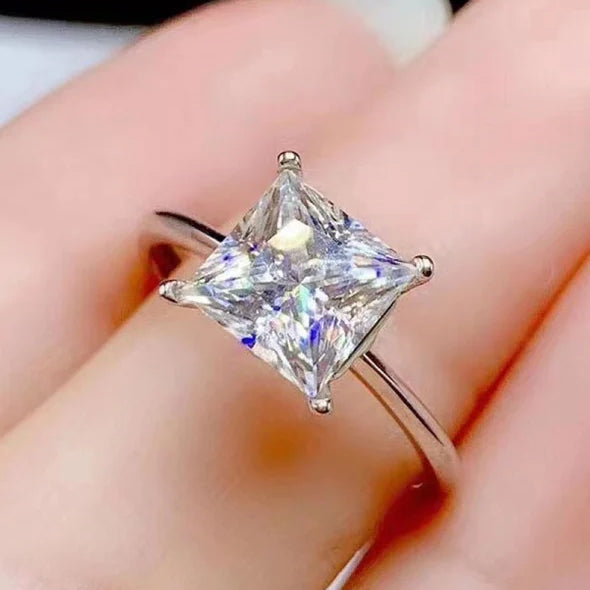
Complete Engagement Rings
Choose a ring with a diamond hand selected by a trained jeweler.


Loose Diamonds
Shop a huge selection of certified natural or lab-grown diamonds. On Sale Now!

Fashion Jewelry
Fashion rings, necklaces, bracelets & earrings. Take your style to a new level.


Comments