
Round Cut Diamonds: A Complete Guide to This Classic Shape


Round cut diamonds remain the gold standard in the gem world, prized for their timeless sparkle and elegant simplicity. As the most classic diamond shape, the round brilliant offers unparalleled brilliance and a versatile style that suits any ring setting. In this comprehensive guide, we’ll cover everything you need to know about round cut diamonds – from what defines a round brilliant and its origins, to how it compares with other shapes, tips for choosing a high-quality round, and insights on pricing (including natural vs. lab-grown options). (Mikado Diamonds is proud to offer a wide selection of both natural and lab-grown round cut diamonds for sale, as you’ll see below.)
What Is a Round Cut Diamond?
A round cut diamond – often called a round brilliant – is the iconic diamond shape characterized by its circular outline and cone-shaped pavilion. Most round diamonds have 57 or 58 facets precisely arranged to maximize light return. Thanks to this optimal facet design, a well-cut round brilliant delivers more sparkle (brilliance and fire) than any other shape. The round shape has no sharp corners, which not only gives it a dazzling symmetrical appearance but also makes it highly durable (no pointed edges means fewer vulnerabilities to chipping). In essence, the round brilliant cut is engineered for maximum radiance – it’s the benchmark against which all other diamond shapes are compared in terms of brilliance.
Origins: Round diamonds have a rich history, with early versions of brilliant-cut stones appearing over the past few centuries. The modern round brilliant cut as we know it today was formalized in the early 20th century. In 1919, Belgian mathematician Marcel Tolkowsky published a landmark thesis outlining the ideal angles and proportions to maximize a diamond’s brilliance and fire, effectively establishing the prototype for the round brilliant’s 58-facet design. Tolkowsky’s formula set the stage for the round cut to become the most popular and “ideal” diamond shape. Over the decades, improved cutting technology and refinement of techniques (such as the development of Hearts & Arrows precision cutting) have only enhanced the round cut’s ability to reflect light. By the mid-20th century, the round brilliant had firmly cemented its place as the most sought-after diamond shape, a status it continues to hold today.
Round Cut Popularity & History
Round diamonds may have historic roots, but they’ve truly dominated the market in the last century. The classic round brilliant became especially popular after Tolkowsky’s innovations, offering a level of sparkle that was unprecedented at the time. Iconic jewelers (like Tiffany & Co. with its six-prong solitaire setting introduced in 1886) helped propel the round diamond into fame as the quintessential engagement ring stone. Throughout the 1900s and into the 2000s, the round cut has remained the top choice for brides and grooms who want a traditional yet dazzling look.
Today, round brilliants are by far the most popular diamond shape for engagement rings, and it’s not even close. Industry data shows that well over half of diamond shoppers choose a round cut – by some estimates, roughly 55–70% of all diamonds sold are round brilliants. The next most popular shape (oval) accounts for only around 16%, illustrating just how dominant the round cut is. This enduring popularity is a testament to the round diamond’s timeless appeal and consistently brilliant performance. From royalty to Hollywood celebrities, countless engagement rings have featured round diamonds, further fueling their classic status in the public eye. For many, a round solitaire diamond symbolizes the ultimate tradition and brilliance – a sparkle that never goes out of style.
Round vs. Oval Diamonds
How does a round brilliant diamond compare to one of its popular rivals, the oval cut? Below we break down the differences in sparkle, bow-tie effect, and visual size between round and oval diamonds:
This graph illustrates the face-up surface area (vertical axis) vs. carat weight (horizontal axis) for different diamond shapes. The round cut (gray dots) has a slightly smaller surface area per carat compared to the oval cut (yellow dots), meaning a round tends to appear a bit smaller than an equivalent-carat oval diamond. In other words, an elongated oval can cover more finger area than a round of the same weight, contributing to its larger look.
-
Sparkle: Both round and oval diamonds are brilliant-cut shapes, so both can exhibit excellent sparkle. However, the round brilliant is mathematically optimized for light performance and is considered the benchmark for maximum brilliance. In fact, no other shape can outshine a well-cut round in terms of fire and brilliance. Ovals, with 57–58 facets, can come close to a round’s sparkle if expertly cut, but you won’t have to worry about losing any fire or scintillation when choosing a round – it’s inherently the sparkliest cut available.
-
Bow-Tie Effect: One notable difference is the bow-tie effect. Elongated shapes like ovals (as well as pears and marquise cuts) often display a subtle dark shadow across the center of the stone – resembling a bow tie – when viewed face-up. This occurs due to light leakage in the middle of elongated facets. Round diamonds do not have a bow-tie effect at all, thanks to their perfect symmetry and uniform facet arrangement. Every round diamond is evenly proportioned, so you won’t see those dark patches interrupting its brilliance. By contrast, with an oval you should always inspect for how faint or prominent the bow-tie is (a heavy bow-tie can detract from an oval’s beauty). With a round, you get a consistently bright appearance with no such dark spots to worry about.
-
Visual Size: This is one area where ovals have an edge. Due to their elongated shape, oval diamonds tend to look larger than round diamonds of the same carat weight. The oval’s length gives it more “face-up” surface area (spreading the weight over a longer shape), so it covers more finger real estate. In fact, an oval may appear roughly 10% bigger face-up than an equivalent-weight round. For example, a 1-carat oval will usually have a longer measurement and may strike the eye as larger than a 1-carat round (which has a more compact 6.5 mm diameter). The round brilliant, by comparison, has a more balanced, circular outline – which many find beautifully symmetrical – but it won’t elongate the finger or appear quite as large as an oval of equal weight. Essentially, if maximizing perceived size is a top priority, an oval can deliver more size-per-carat, whereas a round delivers a more even spread of brilliance.
In the end, choosing between a round and an oval comes down to personal preference. The round is a classic that maximizes balanced sparkle and symmetry, while the oval offers a distinctive look with its elongated elegance and larger appearance. Both can be stunning – it’s about which shape speaks to you and your style. (Need help deciding? Contact Mikado Diamonds and our experts can show you round and oval diamonds side by side to guide your choice.)
How to Choose a Round Diamond
Selecting a brilliant round diamond involves slightly different considerations than some fancy shapes, mainly because rounds are the only diamonds that receive an official cut grade from GIA. Here are key tips for choosing a high-quality round cut diamond:
-
Cut Quality: Prioritize cut above all. The cut grade (proportions and facet alignment) has the biggest impact on a round diamond’s beauty. We recommend sticking to Excellent cut (GIA) or Ideal (if using AGS grading) for round brilliants. Lesser cut grades (Very Good, Good) might save a few dollars but result in noticeably less sparkle – and the savings are usually not worth it. An Excellent cut round has the ideal balance of table size, depth, crown angle and pavilion angle to reflect light brilliantly. Also look for Excellent symmetry and Very Good or Excellent polish for the best results. In short, choose the highest cut grade your budget allows on a round diamond – this ensures you get the mesmerizing sparkle that the round brilliant is famous for.
-
Clarity: The good news is that round brilliants are excellent at hiding minor inclusions. Their intense sparkle and many facets can mask small imperfections, especially near the edges. This means you don’t need an internally flawless diamond for it to appear flawless to the naked eye. In fact, many experts find that grades like VS2 or even SI1 can be “eye-clean” in a well-cut round – offering a much better value than paying for VVS or IF clarity. According to industry data, the most popular clarity grade for round engagement diamonds is VS2, which typically looks perfectly clean without magnification. When choosing clarity, examine the diamond (or magnified images) for any visible marks; as long as inclusions aren’t detectable to your naked eye and aren’t located dead-center under the table, an SI1 or VS2 stone will look just as stunning as a flawless one. You can save thousands by finding an eye-clean diamond in these grades. (Tip: If an inclusion is present but off to the side, a good jeweler can often hide it under a prong during setting.) In summary, focus on eye-cleanliness, not just the clarity grade on paper.
-
Color: Round brilliants tend to mask color tint better than many fancy shapes. Their superior light return can make a near-colorless diamond appear whiter than it actually is. For a round diamond in a white gold or platinum setting, you can generally drop to an H or I color and still see a very white appearance. The sparkle and dispersion of a round brilliant will help counter any very faint warmth in those grades. If you’re setting the round in yellow or rose gold, you have even more leeway – even a J or K color can face up beautifully, since the warm tones of the gold band will make a slightly tinted diamond look perfectly white by comparison. Color is somewhat subjective, so it’s wise to view the diamond in various lighting or against the intended setting color. But overall, round diamonds offer flexibility: you can go lower in color than you would for shapes like ovals or emerald cuts, and the stone will still look icy-white once mounted. This can be a smart way to save money or get a larger stone without sacrificing visual beauty.
-
Certification & Vendor: Always ensure any diamond you consider comes with a reputable lab certification (such as GIA or AGS for natural diamonds, or IGI for many lab-grown diamonds). The grading report will confirm the diamond’s 4Cs and authenticity. With round brilliants, the cert will also include the all-important cut grade and detailed measurements – use these to double-check that you’re getting an Excellent/Ideal cut as recommended. Because even among “Excellent” cuts there can be slight variances, it’s valuable to buy from a vendor who provides actual photos/videos of their diamonds or who has generous return/viewing policies. Being able to scrutinize a round diamond’s facet pattern and brilliance with your own eyes (or a gemologist’s assistance) is ideal. At Mikado Diamonds, for example, every round diamond in our collection (natural or lab-grown) is independently certified and hand-inspected. We provide high-resolution images, 360° videos, and personalized guidance for each stone we sell, so you can confidently choose a round diamond with top-notch sparkle. (Our GIA-trained gemologists are always happy to help you compare stones and find the perfect round brilliant – just ask!)
Pricing & Value of Round Diamonds
One of the important considerations when choosing a round cut diamond is how it fits into your budget. It’s worth understanding that round diamonds generally cost more per carat than other shapes. In fact, the round brilliant is usually the most expensive shape you can buy, size for size. Why is this the case?
There are a couple of reasons behind the round cut’s price premium. First is demand. Round diamonds are the most sought-after shape, which means they command higher prices in the market. Since the majority of engagement rings feature round brilliants, suppliers and cutters know they can charge more due to this strong demand. It’s simple economics – everyone wants one, so the price stays high. Secondly, cutting efficiency plays a big role. Rounds are not an efficient shape to cut from a raw diamond crystal; achieving that perfect round outline and ideal proportions requires sacrificing a lot of the rough stone. In fact, a finished round diamond may utilize only ~40% of the original rough, with the rest cut away as waste. By comparison, many fancy shapes use more of the rough (for example, a princess cut can use up to 80%). Because so much of the rough is discarded to cut a round, the cost per carat is higher to make up for the wasted material. In essence, with a round you are paying partly for the precision and waste involved in creating that ideal shape.
The result of these factors is that round cuts carry a notable price premium. On average, a round cut diamond might cost 20–40% more than a fancy-shaped diamond of the same carat, color, and clarity. (The exact premium varies by specific quality grades and market conditions, but it is significant.) For example, if a 1.5 carat H/VS2 round costs $10,000, a cushion or oval of the same specs might be in the $7,000–$8,000 range – effectively, you pay a few thousand extra for choosing round. Studies of diamond pricing confirm this gap: fancy shapes like oval, cushion, and princess often run 20–30% less expensive than comparable round brilliants, giving you more bang for your buck in terms of size. And as mentioned, in some cases the difference can be on the order of 40% or more.
Is the round cut worth the extra cost? For many buyers, yes. The round brilliant’s unparalleled sparkle, classic appeal, and proven durability make it a perennial favorite despite the premium. It’s the shape that many people envision first when they think “diamond.” Additionally, round diamonds can hold value well in the long run since demand for them stays consistently high. Ultimately, while you do pay more for a round, you’re investing in the most time-honored and brilliance-maximized cut available.
Lab-Grown Round Diamonds: If you’re looking to maximize size or quality for your budget, consider lab-created round diamonds as a savvy option. Lab-grown diamonds have the same chemical and physical properties as natural mined diamonds – the only difference is their origin. Because they can be produced in a laboratory setting, lab-grown diamonds generally cost 30% to 50% less than equivalent natural diamonds. This price advantage can be a game-changer if you want a larger stone or higher specs without breaking the bank. For example, a 2-carat lab-grown round might cost around $5,000, whereas a natural 2-carat round of similar quality could easily be $20,000 or more. In other words, for the price of a 1-carat natural diamond, you could afford a lab-grown diamond twice the size – a huge difference in visual impact. The affordability of lab-grown rounds means you can reach for that dream size or color/clarity upgrade and still stay on budget. And remember, you’re not compromising on beauty or durability: a well-cut lab-grown round will shine just as brilliantly as a natural stone since it’s real diamond in every sense. (At Mikado Diamonds, we offer a wide selection of both natural and lab-grown round diamonds, so you can explore both options. Our team can help you compare stones side by side to find the best value and look for your needs.)
In summary, round cut diamonds deliver unmatched brilliance, classic style, and enduring value. They have a storied history and remain the number one diamond shape today, reigning as the most popular choice for engagement rings by a wide margin. With their optimal light performance and timeless elegance, round brilliants are truly in a class of their own. By paying attention to cut quality and the 4Cs (as outlined above), you can find a breathtaking round diamond that will dazzle you for a lifetime. Whether you choose a natural or lab-grown stone, a round brilliant cut offers sparkle and sophistication that stand the test of time.
Ready to find your perfect round? Explore Mikado Diamonds’ collection of round cut diamonds for sale, or reach out to our expert team for one-on-one guidance. A round cut diamond engagement ring is a gorgeous, enduring symbol of your love – and with the right knowledge (and a trusted jeweler) in hand, you’re sure to choose one that shines brilliantly from every angle.
Mikado Collection
Hand Crafted Engagement Rings, Loose Natural and Lab-Grown Diamonds and a Fashion Jewelry Collection of Rings, Necklaces, Bracelets, and Earrings.

Complete Engagement Rings
Choose a ring with a diamond hand selected by a trained jeweler.


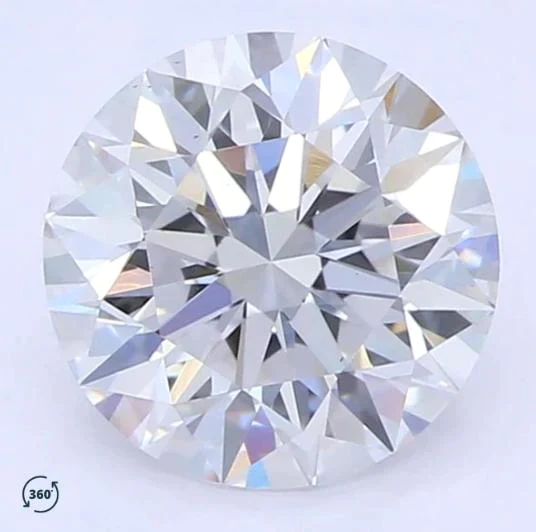
Loose Diamonds
Shop a huge selection of certified natural or lab-grown diamonds. On Sale Now!

Fashion Jewelry
Fashion rings, necklaces, bracelets & earrings. Take your style to a new level.


Comments