
Oval vs. Round Engagement Rings: Which Should You Choose?


Choosing between a classic round brilliant and a sophisticated oval diamond is a good problem to have – both shapes are stunning and wildly popular. Each offers its own advantages in style, sparkle, and size appearance, so the right choice comes down to which fits your vision (and finger) best. Below, we’ll break down the key differences and help you decide with confidence.
Oval vs. Round: Key Differences
-
Brilliance: Round diamonds are engineered for maximum sparkle from every angle, while ovals offer a brilliant shine with a unique “bowtie” flair in the center (when cut well, it’s minimal).
-
Face-Up Size: Ovals tend to look larger for the same carat weight – often 10–15% bigger than an equivalent round. A 1-carat oval can have the finger presence of a larger round.
-
Style & Shape: Round is the timeless classic, perfectly symmetrical and traditional. Oval is an elegant twist on the classic, with an elongated shape that many modern brides adore (celebrities like Hailey Bieber have famously opted for ovals).
-
Budget: Rounds typically cost more per carat (highest demand and more cutting waste). Ovals are often more budget-friendly, giving you a bigger-looking stone for the price.
Now, let’s dive deeper into how each shape shines, how they differ in wear, and examples of Mikado rings that show their beauty in action.
Style & Shape: First Impressions
When you picture each shape on a ring, the visual impression can be quite different:
Round Cut: The Brilliant Classic
Round diamonds are the definition of dazzle – the sparkle icon of engagement rings. With 58 expertly arranged facets, a round brilliant is designed to erupt with fire and brilliance from every angle. Its perfectly symmetrical circle gives a balanced, radiant look that flatters any hand and fits with nearly any ring design. It’s no surprise rounds have been the most popular diamond shape for generations – they exude timeless elegance and that unmistakable “wow” factor when they catch the light.
In terms of style, a round-cut ring always reads as classic and romantic. Whether set in a simple six-prong solitaire or surrounded by a halo of pavé diamonds, a round center stone delivers pure, unapologetic sparkle. For example, a petite pavé band with a round center will have a “fireworks show” effect – maximum sparkle front and center. If you want a ring style that is tried-and-true and maximizes brilliance, you really can’t go wrong with a round diamond.
Styling tip: Round diamonds are incredibly versatile. They shine in elaborate vintage designs and minimalist modern settings alike. A great example is our Anahit Hidden Halo Engagement Ring, which gives a round center diamond a subtle halo of surprise sparkle underneath – a fresh twist on the classic round solitaire look.
Oval Cut: The Elegant Illusionist
Oval diamonds offer the best of both worlds: they capture the brilliance of a round in a more elongated, distinctive silhouette. An oval-cut stone has the same number of facets (58) and a similar facet pattern to a round, so it delivers plenty of sparkle and fire. But thanks to its stretched oval shape, it creates an illusion of greater size and length – hence the “elegant illusionist.” An oval appears larger face-up and also has a slimming, elongating effect on the finger.
Style-wise, ovals are often described as romantic and trendy yet timeless. They’ve surged in popularity with modern brides who want something a bit different but still classic. The elongated shape feels fresh and artistic, and it’s exceptionally flattering. Many brides love that an oval gives their ring a unique identity (fewer people have ovals compared to rounds) while still looking very bridal and classy. It’s a shape that can skew vintage, modern, or anywhere in between depending on the setting.
For example, our Aleyza Three Stone Half Moon Engagement Ring features an oval center paired with half-moon side diamonds – an exquisite design that shows off the oval’s length and brilliance. In this ring, the oval center stone appears impressively large and the side stones gracefully accentuate its shape. Ovals also look phenomenal in halo styles (more on that below), as the halo emphasizes their shape and amplifies size.
Styling tip: Because of their elongated form, ovals bring a touch of vintage elegance (think Georgian or Victorian-era vibes) when set in antique-style halos or ornate settings, and can also look very sleek and modern in simpler designs. They’re a favorite for brides seeking a ring that’s a little less conventional than round, but every bit as stunning.
Sparkle & Brilliance: Which Shape Shines More?
When it comes to sparkle (aka brilliance and fire), both shapes are star performers – but there are some differences to note:
-
Round = All-Out Sparkle: If a blindingly brilliant ring is your top priority, the round cut wins by a nose. Round brilliants are mathematically optimized for light performance, meaning they bounce light internally in a way that produces incredible fire (colored flashes) and brilliance (white sparkle). Even in dim or candlelight settings, a well-cut round will glitter beautifully. In fact, rounds are so forgiving that even an average-cut round can still look pretty sparkly. The sparkle is also very evenly distributed – you get a consistent dazzle across the entire stone, no dead zones. This is due to the round’s perfect symmetry focusing light back up to your eye.
-
Oval = Sparkle with Personality: Oval diamonds are cut in the brilliant style as well, so they do sparkle a lot – don’t think that choosing oval means choosing a duller ring. A high-quality oval will throw off gorgeous flashes of light. However, ovals can exhibit something called the “bow-tie” effect: a faint shadow in the shape of a bow-tie across the middle of the stone. All but the most expertly cut ovals show a slight bow-tie, but the key is whether it’s distracting or barely noticeable. At Mikado, we carefully evaluate every oval diamond under multiple lighting conditions to ensure any bow-tie is minimal and that the stone shines brilliantly overall. A well-cut oval will have a sparkle that’s a touch more “flashy” in certain areas (larger facets = larger flashes of light) compared to the all-over twinkle of a round. Some people love this personality – it can give the oval a captivating depth and character.
In practical terms, unless you’re comparing side by side, both a round and an oval will look dazzling on the finger. But if you’re truly obsessed with maximizing sparkle, round is typically considered the benchmark for brilliance. If you prefer a mix of sparkle and a unique look, an oval’s shimmer will more than satisfy while giving you that different shape.
Note: For maximum sparkle in either shape, pay attention to cut quality. And remember, lab-grown vs. natural can also affect budget without changing sparkle – a lab-grown round or oval will shine just as bright, often at a lower cost. (Many of our clients choose a lab-grown oval so they can afford a larger, super-sparkly stone without breaking the bank!)
Size & Finger Coverage: Does One Look Bigger?
One of the biggest questions we hear: “Will an oval look larger on my hand than a round?” The short answer: Yes, ovals tend to face-up larger. This is a major selling point for the oval shape.
-
Oval Diamonds = More Finger Coverage: Thanks to their elongated shape and typically shallower depth, ovals often appear 10–15% larger than round diamonds of the same carat weight. The length of an oval gives it a greater surface area spread across the finger. For example, a 1-carat oval might measure roughly 8x5 mm, whereas a 1-carat round is about 6.5 mm in diameter. That oval’s length creates an illusion of a significantly bigger stone. If you put them side by side, the oval will cover more of the finger, no question. Many oval lovers are drawn to this “big look” without the big jump in carat (and cost).
-
Round Diamonds = A Bold, Compact Sparkle: Round diamonds are deep-cut and hold a lot of their weight below the girdle (the widest point), so their face-up dimensions are a bit smaller relative to carat. However, what rounds lack in spread they make up in brilliance and presence. A round’s intense sparkle can create the impression of a “full” and very eye-catching stone even if its measurements are a tad smaller. In other words, a round may not cover as much finger area as an oval, but it draws your eye with its bright flash.
In terms of finger coverage, ovals not only look larger, they also elongate the look of your finger. The oval’s length can make shorter or wider fingers seem more slender and long – like how vertical stripes can flatter a figure. That’s a nice perk if you’re concerned about how an engagement ring will look on your hand. Round diamonds, being symmetric, don’t particularly elongate, but they are universally flattering on all finger types (they don’t accentuate length or width, they just are – a round shape is proportionate on any hand).
So, if you’re going for maximum wow size, an oval gives you the most bang for your carat. A 0.8–1.0 carat oval can easily look like what a 1.0–1.2 carat round would, to the eye. On the flip side, if you prefer a classic look and aren’t as concerned about the stone looking huge for the weight, a round will offer a more compact, but ultra-sparkly, presentation.
Try this: If you have the opportunity, try on one of each shape in similar carats. Many of our clients are amazed at how much larger an oval appears. But others ultimately feel more drawn to the intense sparkle of the round, even if it’s a bit smaller. It’s a personal preference – do you want bigger sparkle, or bigger size? There’s no wrong answer!
Price & Value: Budget Considerations
Your engagement ring is a significant investment, so it’s smart to consider how shape impacts the price. Here’s the scoop:
-
Round Diamonds Cost More: In general, round brilliant diamonds command the highest price per carat of any shape. There are a couple reasons for this. First, round cuts are the most in-demand shape, and higher demand drives up prices. Second, cutting a rough diamond into a round wastes more material – the round shape doesn’t use as much of the original crystal, so more weight is lost in the cutting process. More waste = higher cost for the finished stone. For these reasons, you might pay 20-35% more for a round diamond versus a comparable oval (or other fancy shape) of the same carat and quality. In practical terms, if you’re on a fixed budget and have your heart set on a round, you may need to either drop a bit in carat weight or in color/clarity to meet your budget. Many buyers happily do so for that unmatched round sparkle, but it’s good to know going in.
-
Ovals Offer Better Value for Size: Fancy shapes like ovals, cushions, pears, etc., are typically more affordable than rounds of equal size and quality. Ovals in particular can be a smart buy because of the reasons above in reverse – they use more of the rough diamond (less cutting waste) and historically have been slightly less demanded than rounds (though ovals are extremely popular now, too). The result is you often save a noticeable amount by choosing an oval. That could mean getting a larger carat oval for the same money you’d spend on a smaller round. For example, with a given budget, you might afford a 1.2 carat oval vs. a 1.0 carat round of the same specs. Or, if you stick to the same carat, the oval will likely cost less. Either way, ovals tend to give more bling for your buck.
To put it simply: if budget is a major factor and you want the biggest, most impressive-looking diamond for your dollar, an oval is usually the way to go. If your heart is set on a round, it’s worth the premium – just plan for that in your budget. Also, remember you can mix and match shape with diamond type to save money. For instance, a lab-grown oval will cost significantly less than a natural oval, and the same goes for rounds. At Mikado we have natural and lab-grown options for both shapes, so you can find the sweet spot for your budget (and often upgrade your size or quality by going lab-grown if you wish).
Fun fact: Because round diamonds are so popular and standardized, they are the only shape that receives an official GIA cut grade. Fancy shapes (like ovals) do not – which means you’ll rely more on dimensions and the jeweler’s evaluation to judge cut. But it also means some off-shape ovals can be bargains. Our experts can help identify a well-cut oval that maximizes beauty and value.
Setting Versatility & Style Options
Beyond the stone itself, think about the ring setting – certain styles may appeal to you more depending on the shape you choose. The good news is that both round and oval diamonds are quite versatile and look fantastic in a wide range of engagement ring designs. Here are some popular style options and how each shape shines in them:
Round Cut in Settings: Endless Possibilities
There’s practically no ring style that a round diamond can’t do well. Its symmetry makes it a chameleon in design. A few beloved options include:
-
Halo Settings: A halo of smaller diamonds around a round center stone is a recipe for pure sparkle overload. The round center’s brilliance combined with a diamond halo gives a “big look” and intensifies the shine. A halo can even make the round center appear larger than it is. If you love glamour and maximum sparkle, a round halo ring is hard to top (our designers note halos are especially popular for rounds). For example, a classic French pavé halo around a round diamond creates a dazzling, on-trend look that still feels timeless.
-
Solitaire Settings: The enduring classic – a single round diamond on a simple band – remains a top choice for good reason. A round in a solitaire (whether it’s a four-prong or six-prong head, or a bezel, etc.) allows the perfection of the shape and the diamond’s sparkle to take center stage. Many who pick round do so because they want that iconic solitaire look. It’s elegant, focuses all attention on the diamond, and never goes out of style.
-
Vintage & Modern Styles: Rounds play nicely with accent stones and ornate details too. Three-stone rings (say, a round flanked by two smaller rounds or trillions) are popular for their symbolism and added sparkle. Vintage-inspired designs with milgrain, filigree, or floral motifs often use round centers, since round was also common historically. On the flip side, contemporary designs like hidden halos (a hidden diamond halo under the center stone) or sleek bezel settings also frequently feature rounds. Our Anahit Hidden Halo is a perfect example of blending classic round brilliance with a modern twist of hidden sparkle. Bottom line: round diamonds are the ultimate team player in ring design – they look amazing in any setting style.
Oval Cut in Settings: Flattering & Unique Looks
Ovals can be set in many of the same styles as rounds, with a few special considerations that make them really shine:
-
Halo & Double Halo: Just as with rounds, halo settings are hugely popular for ovals. An oval halo ring presents a breathtaking “oval within oval” look that emphasizes the shape and dramatically boosts visual size. Because the oval already faces up large, adding a halo can make even a 0.8 ct oval look like a 1.5 ct! The halo also helps mask any small bow-tie by adding sparkle in all areas. If you want your oval ring to truly turn heads, a halo (or even a double halo) will do it. The overall style can be vintage (with antique details around the halo) or modern (simple micro-pavé halo) – either way, it’s stunning.
-
Three-Stone & Side Accents: Ovals are fantastic in multi-stone settings. One popular design is an oval center with pear-shaped side stones – the curves of the pears complement the oval’s shape for an elegant tapered look. Another gorgeous option: half-moon side diamonds, as seen in our Aleyza ring, which form a beautiful frame around the oval. Even classic round or baguette side stones work nicely with ovals, providing contrast in shape. Three-stone oval rings have a very luxurious, balanced appearance (and extra sparkle, of course). If you like a little extra adornment, consider an oval with side diamonds or a diamond-accented band. Mikado offers many oval-capable settings with various accent stone shapes to create the look you love.
-
Solitaire & East-West: An oval solitaire is incredibly elegant and gives a sleek, elongating look on the finger. Many brides who want something minimalist yet a bit unexpected choose an oval solitaire. You can even set the oval East-West (horizontally) for a modern, artsy vibe – this style has gained popularity for being uniquely eye-catching while still simple. An East-West oval on a delicate band is a ring that whispers style-forward. Even in a traditional North-South orientation, a plain oval solitaire in platinum or gold is a knockout – the shape alone adds character versus a standard round solitaire.
-
Vintage-Inspired: Ovals have a naturally vintage flair (oval cuts became famous in the 1960s, but their elongated shape harks back to earlier antique rings). If you love vintage details, ovals pair beautifully with them. Imagine an oval in a rose gold setting with a halo of small pavé and milgrain edges – the result is irresistibly romantic. Ovals in antique-style floral or victorian-inspired mounts look heirloom-worthy. Their shape just lends itself to that old-world romance, if that’s your style.
In short, ovals are just as versatile as rounds, with a dash more drama due to their shape. They can do classic, they can do unconventional. The only slight difference is technical: an oval has two “pointed” ends (even though they’re rounded, they are narrower tips) that need protective prongs or bezel at the tips. Our jewelers ensure every oval is set securely with prongs at the ends to guard against chips. Other than that, you can design freely around an oval.
Final Thoughts: Personal Style Is Key
At the end of the day, oval vs. round is not about one being “better” than the other – it’s about what resonates with you. Both shapes are absolutely gorgeous, and each will give you a ring to be proud of for a lifetime. To recap in plain terms:
-
Choose a round engagement ring if you love classic, timeless style and crave that ultimate brilliant sparkle. A round will always be a showstopper in a traditional way. It’s for the bride who wants a ring that feels iconic, elegant, and dazzlingly radiant. As one of our consultants often says: “Rounds are the no-brainer choice for a look that’s eternally in vogue.”
-
Choose an oval engagement ring if you’re drawn to a unique shape with big visual impact – you get brilliance and an elongated, larger look. Ovals speak to those who appreciate a touch of individuality and maybe a bit of vintage or modern flair combined with classic sparkle. It’s a shape that says you’re fashion-forward, yet appreciate enduring elegance.
Still torn? Here’s a quick self-test: When you picture your dream ring, do you picture the shape or the sparkle first? If it’s the sparkle, you might be a round girl. If it’s the shape and size presence, you might be leaning oval. But truly, you can’t make a “wrong” choice here. Many brides eventually try on both and simply feel which one is “them.”
Ready to find your perfect ring? We’re here to help! Browse our collections of engagement rings to see both round engagement rings and oval engagement rings side by side. Pay attention to which shape makes your heart skip a beat. You may also consider choosing a setting that can be made for either shape – at Mikado, almost all of our ring designs can accommodate whichever center stone you prefer, so you can experiment. And if you want expert guidance, reach out to our team or visit us for a virtual appointment – we’ve helped thousands of couples navigate this exact decision.
In the end, the best ring is the one that feels perfect to you. Whether it’s a round that sparkles like crazy or an oval that wows with its elegant size, your engagement ring should reflect your style and make you excited every time you look at it. So choose the shape that makes you smile the most – and you’ll have a ring you’ll love forever. Congratulations and happy ring shopping!
Check out our Oval vs. Round ring comparisons in person by scheduling a consultation, or dive into our education guides for additional tips. Whatever you decide, we’re here to ensure you get the ring of your dreams.
Mikado Collection
Hand Crafted Engagement Rings, Loose Natural and Lab-Grown Diamonds and a Fashion Jewelry Collection of Rings, Necklaces, Bracelets, and Earrings.

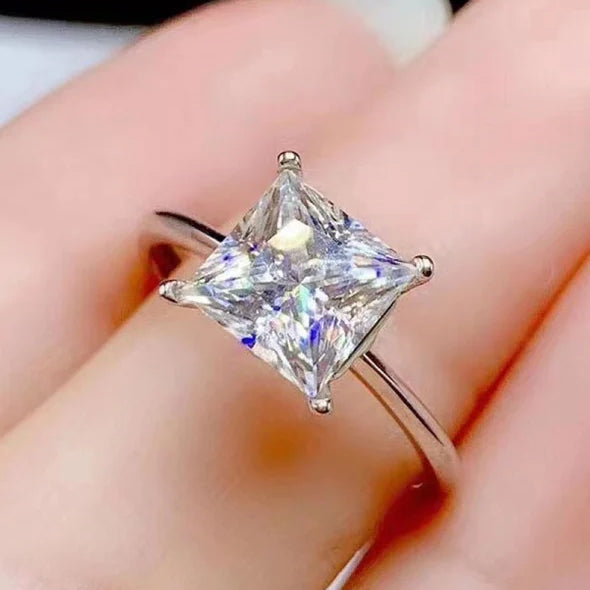
Complete Engagement Rings
Choose a ring with a diamond hand selected by a trained jeweler.

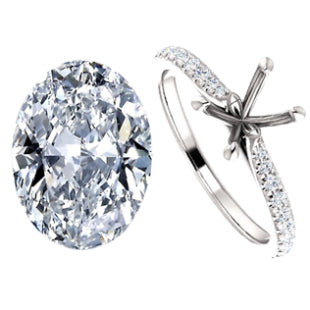

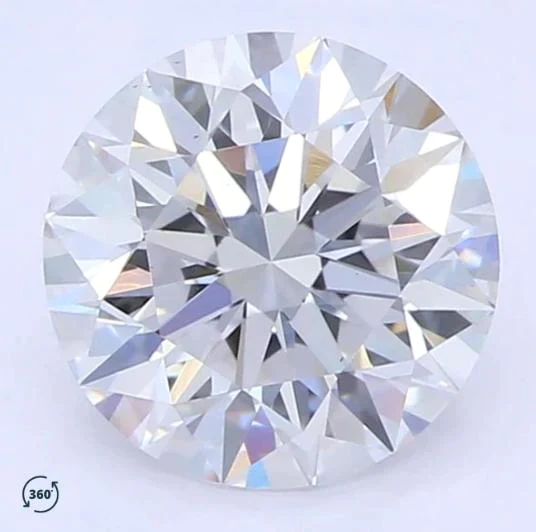
Loose Diamonds
Shop a huge selection of certified natural or lab-grown diamonds. On Sale Now!

Fashion Jewelry
Fashion rings, necklaces, bracelets & earrings. Take your style to a new level.


Comments