
Lab Grown Diamonds and the Standard for Quality and Clarity


At Mikado Diamonds, we've watched the diamond industry transform over the past decade, and lab-grown diamonds sit at the center of that change. They aren't a compromise, a substitute, or a "close enough" alternative. They are, by every measurable standard the gemological world uses, diamonds. And when it comes to quality and clarity, they often outperform their mined counterparts. Here's why.
Lab-Grown Diamonds Are Real Diamonds, Chemically, Optically, Physically
The most important thing to understand up front: a lab-grown diamond is not an imitation. It is pure crystalline carbon with the same atomic structure, refractive index, hardness (10 on the Mohs scale), and fire as a diamond pulled from the earth. The Federal Trade Commission, the GIA, and the IGI all classify them as diamonds, full stop.
What differs is the origin story. Mined diamonds formed over roughly one to three billion years under the extreme heat and pressure of Earth's mantle. Lab-grown diamonds are created in weeks using two proven methods: High Pressure High Temperature (HPHT) and Chemical Vapor Deposition (CVD). Both replicate the conditions that produce natural diamonds, and both yield stones that are gemologically identical to mined ones.
Why Clarity Tends to Be Higher in Lab-Grown Diamonds
Clarity refers to the presence or absence of internal inclusions and surface blemishes. In natural diamonds, inclusions are almost inevitable, the billion-year journey through Earth's crust exposes the crystal to countless disruptions. Trapped minerals, feathering, clouds, and pinpoints are common, and truly flawless natural diamonds are extraordinarily rare (and priced accordingly).
Lab-grown diamonds are created in a controlled environment where the growth conditions are monitored second by second. That control translates to fewer inclusions, cleaner internal structures, and a much higher percentage of stones landing in the top clarity grades: VVS1, VVS2, VS1, VS2, and even IF (Internally Flawless) and FL (Flawless).
When you browse our collection of loose lab-grown round brilliants, you'll notice something striking: the availability of high-clarity, high-color stones at carat weights that would be prohibitively expensive in mined form. That isn't marketing — it's a direct result of how the growth process works.
The Four Cs, Applied to Lab-Grown Diamonds
Lab-grown diamonds are graded on the exact same criteria as mined diamonds, the Four Cs.
Cut is arguably the most important C, because it determines how light performs inside the stone. Excellent and Ideal cut grades produce the fire, brilliance, and scintillation that make a diamond come alive. Mikado sources round brilliants in Excellent, Ideal, and Very Good cut grades so that every stone maximizes light return.
Color in white diamonds is graded from D (colorless) to Z (light yellow or brown). The colorless range — D, E, F — and the near-colorless range — G, H, I — face up bright and white. Lab-grown diamonds routinely achieve the top color grades because the growth environment can be tuned to minimize nitrogen and other trace elements that cause color.
Clarity grades run from FL (Flawless) down through IF, VVS1, VVS2, VS1, VS2, SI1, SI2, and I1–I3. Anything VS2 or better is eye-clean under normal viewing conditions. SI1 is often eye-clean depending on where the inclusions sit. Lab-grown stones cluster heavily in the top clarity grades, giving buyers real optionality.
Carat measures weight, not size, though the two correlate closely in well-cut rounds. Because lab-grown diamonds are more accessible per carat, buyers can move up in size without sacrificing color or clarity, a tradeoff that historically defined mined-diamond shopping.
Certification: Third-Party Grading Removes the Guesswork
Every diamond we feature is graded by an independent laboratory, typically IGI or GIA. That certification isn't a formality. It's a legal document that verifies exactly what you're buying: the cut, color, clarity, carat weight, measurements, polish, symmetry, and fluorescence of the stone. It also confirms that the diamond is lab-grown, which is laser-inscribed on the girdle for permanent identification.
Third-party certification is the reason lab-grown diamonds have earned the trust of jewelers, gemologists, and consumers alike. There's no room for interpretation, the report tells you exactly what you have.
Value Without Compromise
The economic reality is simple: a lab-grown diamond of equivalent Four Cs typically costs a fraction of its mined equivalent. That difference doesn't reflect lower quality, it reflects a shorter, more efficient supply chain. There's no exploration, no mining, no rough sorting through millions of tons of ore. The result is a diamond that can be graded higher, sized larger, and priced lower.
For engagement rings, anniversary pieces, or investment-grade loose stones, this changes what's possible. A two-carat, F color, VS1 clarity, Ideal cut round brilliant is no longer a fantasy purchase, it's a realistic option.
Sustainability and Traceability
Lab-grown diamonds have a substantially smaller environmental footprint than mined stones. There's no land disruption, no displaced communities, and full traceability from the reactor to the ring. For buyers who care where their diamond came from, lab-grown offers an answer with documentation.
Frequently Asked Questions About Diamond Clarity
What does diamond clarity actually measure?
Clarity measures the presence, size, position, and visibility of internal inclusions and surface blemishes under 10x magnification. Higher clarity grades mean fewer or less visible imperfections.
What clarity grade is best for the money?
For most buyers, VS1 or VS2 offers the best value. These grades are eye-clean (meaning inclusions are invisible without magnification) but cost significantly less than VVS or Flawless stones.
Is SI1 clarity a good choice?
Often, yes. Many SI1 diamonds are eye-clean depending on where the inclusions are located. This is why reviewing the actual diamond or a high-resolution image matters more than the grade alone.
Do lab-grown diamonds have inclusions?
Yes, though typically fewer and different in nature than mined diamonds. Lab-grown inclusions are usually metallic (in HPHT stones) or crystalline (in CVD stones) and are graded on the same scale.
Are Flawless lab-grown diamonds worth the premium?
Only if you value the certification designation itself. Visually, a VVS2 or VS1 diamond is indistinguishable from Flawless to the naked eye. The premium is real, but the visible difference isn't.
Does clarity affect a diamond's sparkle?
Cut affects sparkle far more than clarity. A well-cut SI1 will outperform a poorly cut VVS2 every time. Prioritize cut first, then color, then clarity.
How can I verify a diamond's clarity grade?
Every certified diamond includes a grading report from IGI or GIA that details its clarity along with a plotted diagram showing inclusion locations. Every Mikado lab-grown diamond ships with its certificate.
Mikado Collection
Hand Crafted Engagement Rings, Loose Natural and Lab-Grown Diamonds and a Fashion Jewelry Collection of Rings, Necklaces, Bracelets, and Earrings.

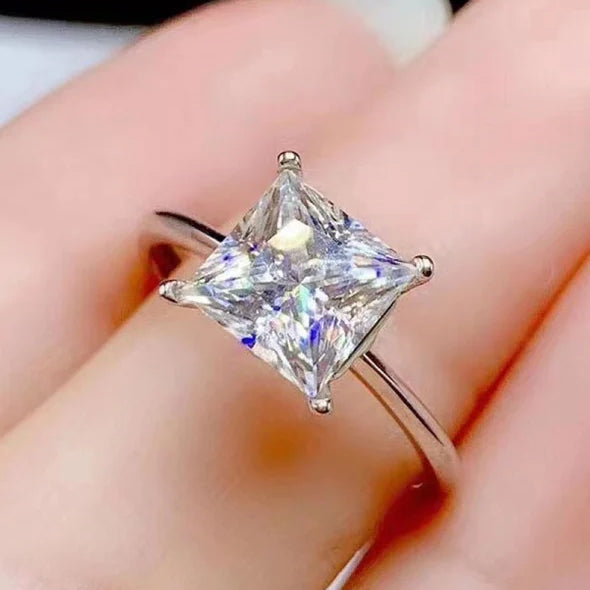
Complete Engagement Rings
Choose a ring with a diamond hand selected by a trained jeweler.

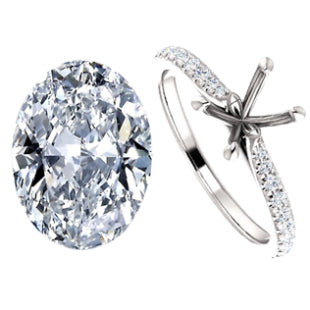

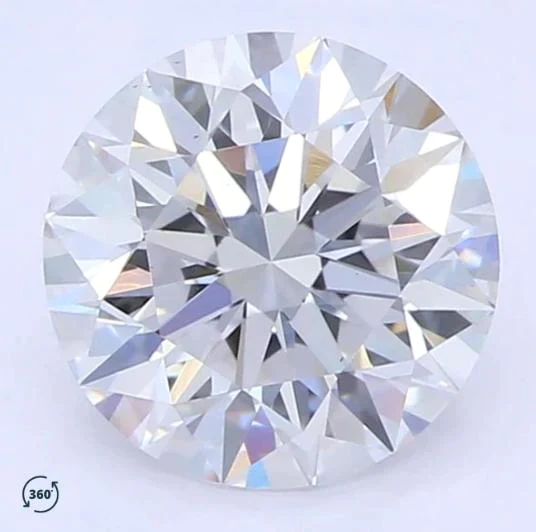
Loose Diamonds
Shop a huge selection of certified natural or lab-grown diamonds. On Sale Now!

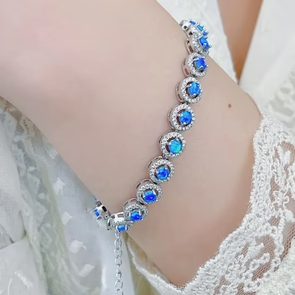
Fashion Jewelry
Fashion rings, necklaces, bracelets & earrings. Take your style to a new level.


Comments